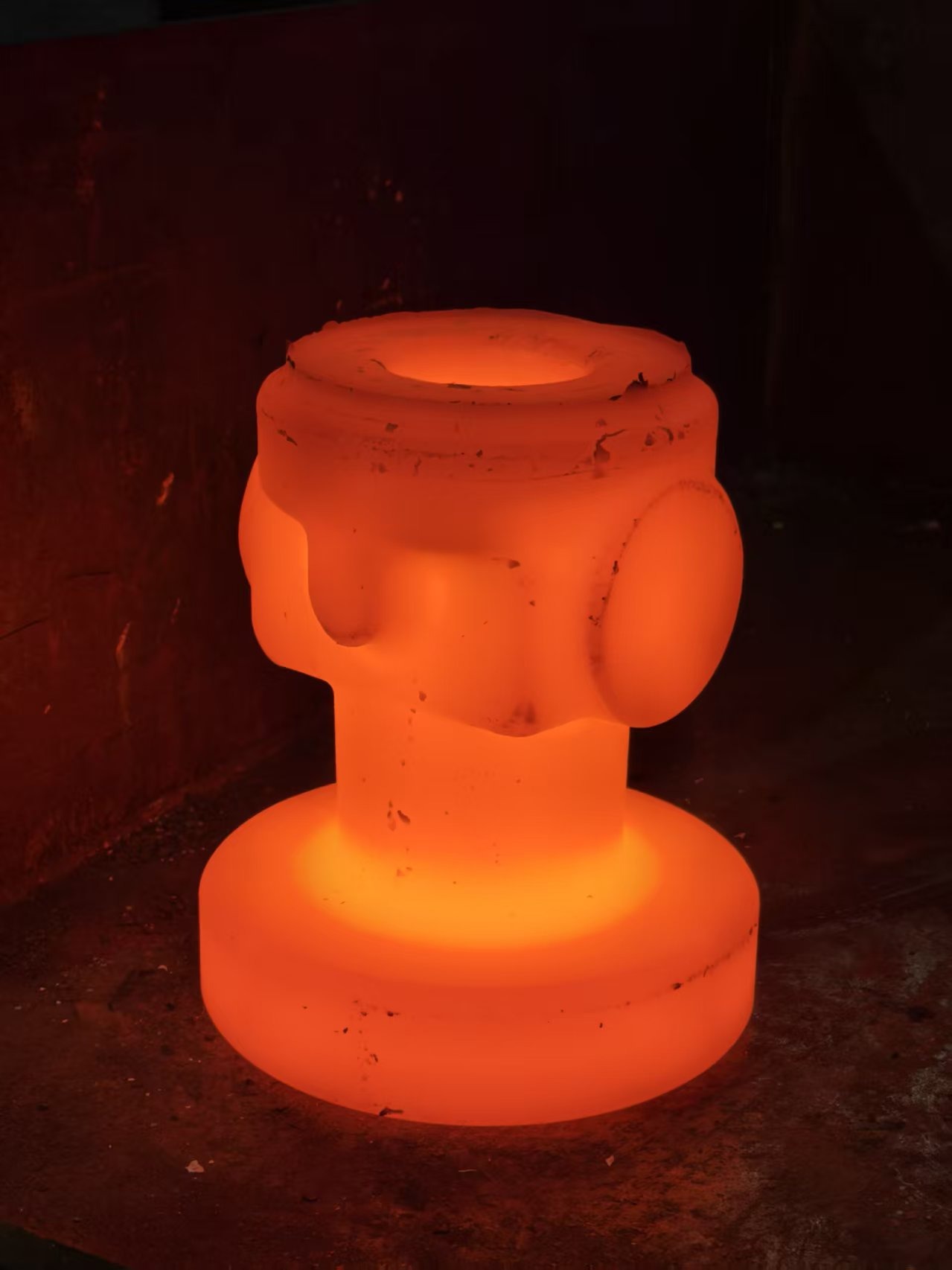
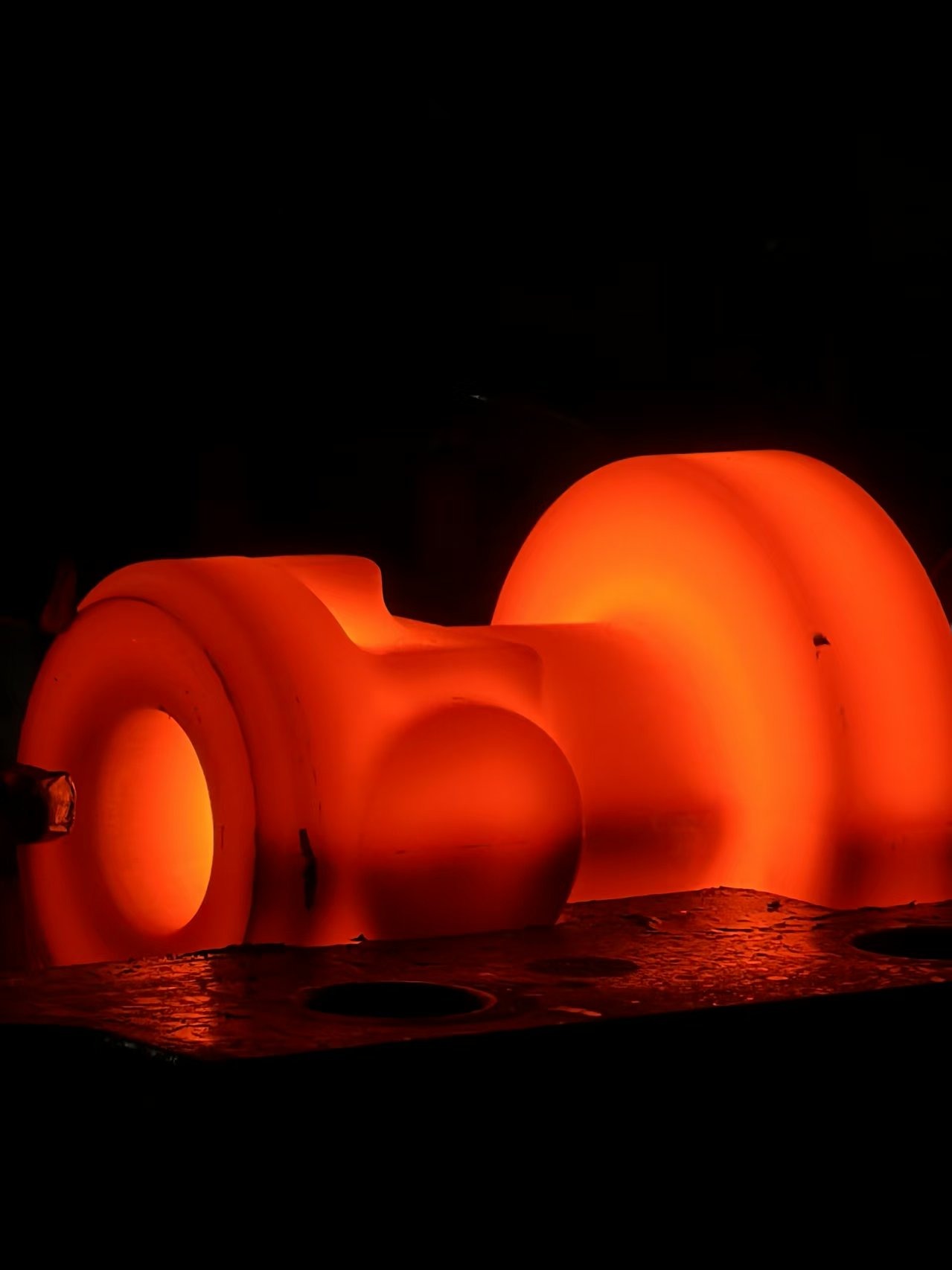
Incoloy 825 is a nickel-iron-chromium alloy with molybdenum, copper and titanium additions, chosen for acids and seawater rather than for strength at temperature. The same grade is written as Alloy 825, or by its UNS number N08825; its European designation is 2.4858. Longrui Forging forges 825 into valve bodies, covers and process parts at its plant in Yunhe County, Zhejiang, China, where single pieces run from 5 kg to 520 kg.
The grade sits between stainless steel and the high-temperature nickel alloys in both price and purpose. Against 316L it adds enough nickel and molybdenum to survive reducing acids and chloride service; against Alloy 625 it gives up high-temperature strength and gains a lower price for the same wet-corrosion jobs.
What Alloy 825 Is
825 is an austenitic nickel-iron-chromium alloy, stabilised with titanium, and it carries its corrosion resistance in its chemistry rather than in a heat treatment. There is no ageing step: the annealed condition is the delivered condition.
| Element | Composition, % |
|---|---|
| Nickel | 38.0 – 46.0 |
| Chromium | 19.5 – 23.5 |
| Iron | balance, from about 22 |
| Molybdenum | 2.5 – 3.5 |
| Copper | 1.5 – 3.0 |
| Titanium | 0.6 – 1.2 |
| Aluminium | 0.20 max |
| Carbon | 0.05 max |
Density is 8.14 g/cm³ and the melting range is about 1370 to 1400 °C. Brinell hardness in the annealed condition sits around 85 to 95 on the Rockwell B scale, which is to say the grade machines more like a stainless steel than like Alloy 718. For a forging order the numbers that matter are the ones in ASTM B564: 85 ksi (586 MPa) minimum tensile and 35 ksi (240 MPa) minimum yield, with typical annealed values higher again, around 100 ksi tensile and 45 ksi yield.
Alloy 825, Incoloy 825 and Inconel 825
Enquiries regularly arrive asking for Inconel 825. There is no such designation: Inconel and Incoloy are two different families from the same producer, and 825 belongs to the Incoloy side, which is the nickel-iron-chromium family. Alloy 825, Incoloy 825, UNS N08825, 2.4858 and NICr21Mo are all the same material.
It matters in practice because a drawing, a heat record and a certificate have to agree. We quote and certify by the alloy name and the UNS number, so the grade on the paper cannot be confused with a different family.
Alloy 825 or Alloy 625: How to Choose
This is the comparison that comes up most often, because both grades are bought for corrosive service and both are forged in the same plant. They are not interchangeable, and the deciding question is what is attacking the part:
| Alloy 825 | Alloy 625 | |
|---|---|---|
| Base | Nickel-iron-chromium with Cu and Ti | Nickel-chromium-molybdenum, niobium |
| Strengthening | Solid solution, no ageing step | Solid solution, no ageing step |
| Best at | Reducing acids, sulphuric and phosphoric acid, seawater, pitting and crevice corrosion | Chlorides and stress corrosion cracking, high-temperature oxidation, sour gas |
| Service temperature | Wet service; above about 538 °C the structure changes and ductility falls, so it is not a creep grade | Holds usable strength to roughly 980 °C |
| Relative cost | Lower | Higher |
| Typical parts | Acid plant and pickling equipment parts, tanks and internals, process piping parts, flanges, valve bodies | Seawater and subsea hardware, chemical process parts, high-temperature exhaust and valve internals |
A rough rule that holds up in practice: if the duty is hot, or the chloride level is severe, the answer is Alloy 625, or Alloy 718 where strength has to be held at temperature. If the duty is a wet acid or a mixed acid attack at ordinary temperatures, 825 does the job for less. Where a part sees both, the alloy is chosen for the worse of the two conditions, and we will say so at the enquiry stage.
Alloy 825 or Alloy 20: How to Choose
Alloy 20 comes up as the other answer for acid service, so it is worth setting out where the two grades part company. Both are nickel-iron-chromium alloys for wet corrosion, and in intermediate sulphuric acid they behave much the same; the difference is how much nickel each carries and what the rest of the environment contains.
| Alloy 825 | Alloy 20 | |
|---|---|---|
| UNS number | N08825 (2.4858) | N08020 (2.4660) |
| Nickel | 38.0 to 46.0 % | 32.0 to 38.0 % |
| Copper | 1.5 to 3.0 % | 3.0 to 4.0 % |
| Stabiliser | Titanium | Niobium plus tantalum |
| Best at | Sulphuric and phosphoric acid, seawater, chloride stress corrosion cracking, and service that alternates between oxidising and reducing conditions | Sulphuric acid as the main duty, with useful resistance to nitric and phosphoric acid and to chlorides |
| Watch | Above about 538 °C the structure changes and ductility falls, so it is not a creep grade | Chloride stress corrosion cracking is resisted, but general corrosion in chloride service is not; the rate climbs as the chloride level rises |
| Forging standard | ASTM B564 | ASTM B462 |
The practical split is this. Where sulphuric acid is the whole duty and the concentration and temperature window is settled, Alloy 20 is the usual choice. Where the same plant also sees chlorides, seawater or phosphoric acid, or moves between oxidising and reducing conditions, 825 leaves the wider margin, and in dilute acid it is the stronger of the two.
The standards are where enquiries most often need correcting. 825 forgings are made to ASTM B564, while Alloy 20 flanges, fittings and valve parts are called out under ASTM B462. If a drawing names Alloy 20 and the service suits 825, or the other way round, we will say so at the enquiry stage, before tooling is committed.
Where Alloy 825 Is Used
- Sulphuric and phosphoric acid plant equipment: evaporators, heat exchanger parts, tanks
- Pickling lines and surface treatment: heating coils, baskets, hooks, tanks
- Chemical process piping parts, flanges and valve bodies
- Pollution control and scrubber components
- Oil and gas well piping where the service is wet and corrosive rather than hot
- Nuclear fuel reprocessing equipment
Where 825 is the wrong answer: anything where creep strength or high-temperature strength is a design factor. Above about 538 °C the alloy goes through microstructural changes that reduce ductility and impact strength, which is why it is not specified for hot sections. For those duties the answer is 625 or 718, not a heavier 825 part.
What We Forge in 825
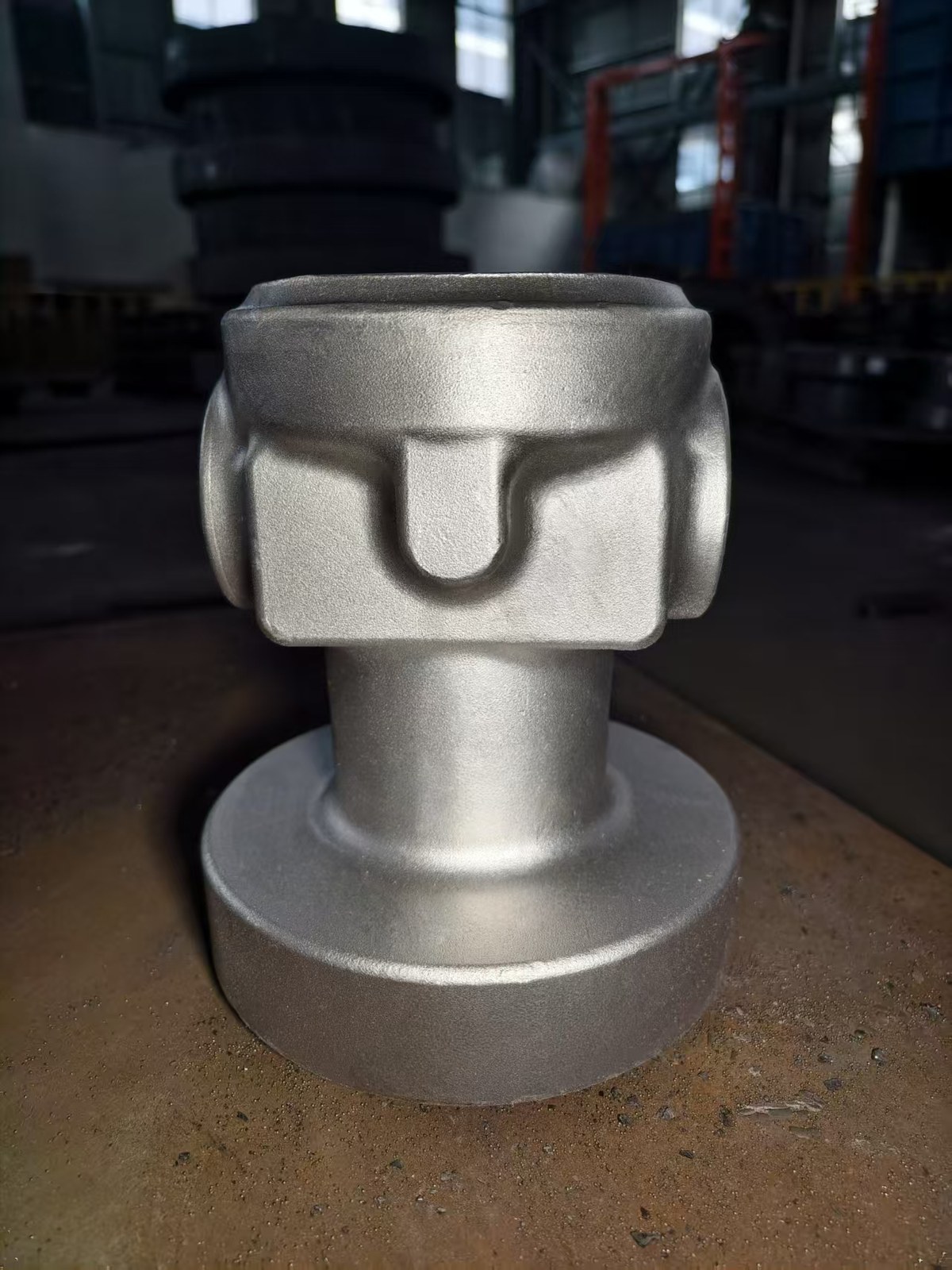
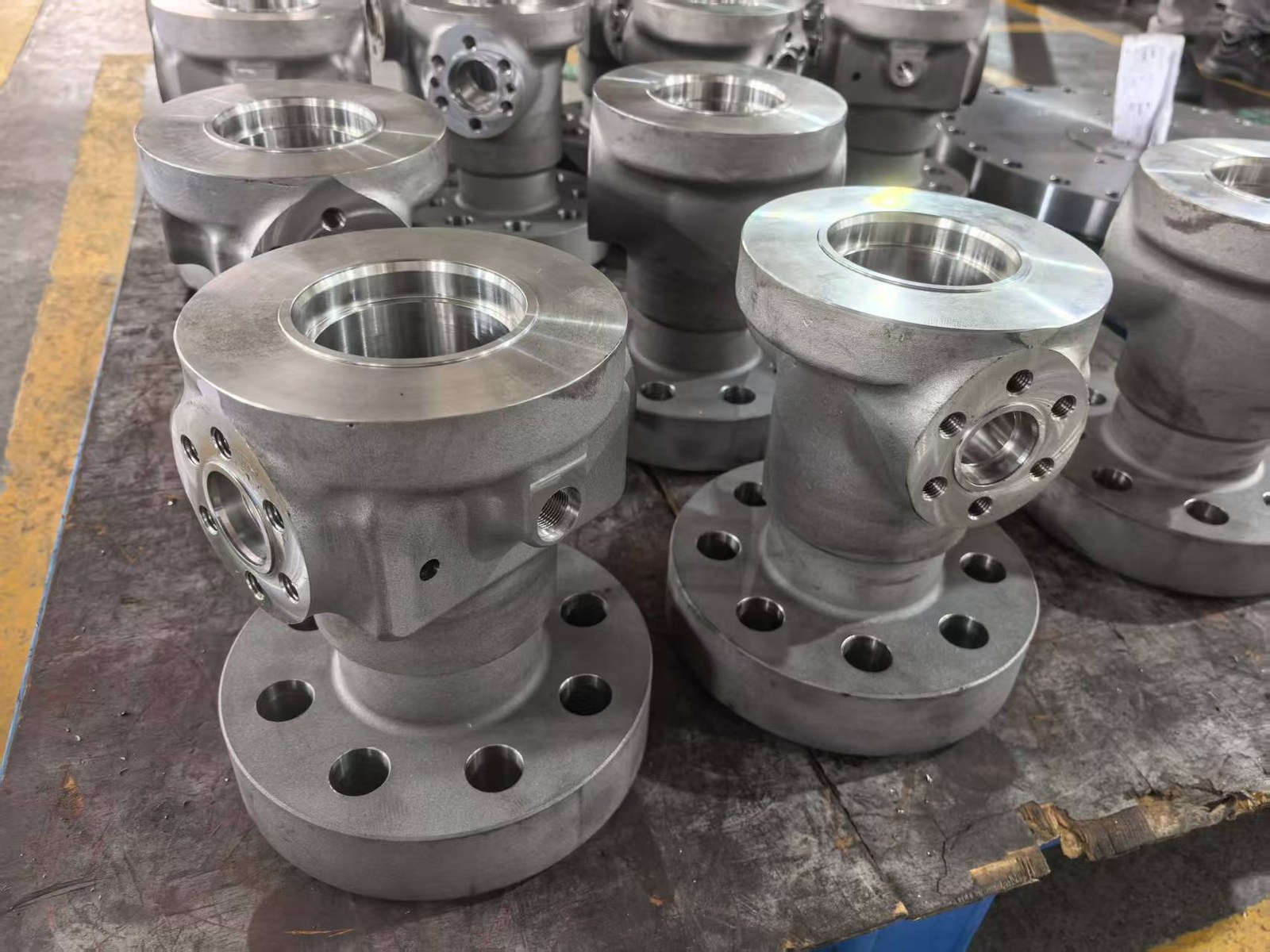
- Bodies and covers for process, chemical and acid-plant valves
- Flanges and ring parts, to the ASME B16.5 tables or to project dimensions
- Piping components, housings and one-off shapes worked from the drawing
- Single pieces between 5 kg and 520 kg, forged on the 6,000 T multi-directional press or one of the smaller presses
- Delivered as-forged, rough machined, or fully machined to the drawing, with dimensional records for machined surfaces
- Ultrasonic, magnetic particle, penetrant and visual examination, scoped on the order
Forging and Heat Treatment
825 is forged in the same temperature band as the other nickel alloys in our range, and it does not harden by ageing, so the heat treatment after forging is a single anneal rather than a solution and age cycle:
- The forging window is held and logged, so the part is worked inside it rather than at the edge
- Anneal at 1700–1800 °F [930–980 °C], then cool fast, in air or in water
- Every heat checked on our own spectrometer, including the titanium and copper that mark 825 out from a plain nickel-iron alloy
- Furnace and cooling-medium temperatures logged for the batch, and the chart can travel with the order
The reason the anneal matters on this grade is corrosion resistance rather than strength: it is what keeps the carbides and the intermetallic phases in solution after forging, and the cooling rate afterwards is part of getting there. Details of the heat treatment route by grade are on the materials page.
Standards, Documents and Testing
825 forgings are made to ASTM B564, the nickel alloy forging specification. The same chemistry in pipe form comes under B423, welded pipe under B424 and welded tube under B425, so an enquiry that mixes those designations is usually a pipe enquiry, and it is worth settling which product form is wanted before the price is worked out.
Delivery on an 825 order normally includes an EN 10204 3.1 inspection certificate. Where a project wants the testing witnessed, a 3.2 signed by an outside inspector can be supplied on request and is priced as a separate line. Chemistry and mechanical results, the NDT reports for the agreed scope and the heat treatment chart accompany the shipment, and every piece traces back to its heat number. Our equipment list sits on Capability, and the full certificate set is on the certifications page.
Related Reading
Frequently Asked Questions
What is Alloy 825?
Alloy 825, UNS N08825, is an austenitic nickel-iron-chromium alloy with molybdenum, copper and titanium additions. It is made for resistance to acids and chloride service rather than for high-temperature strength, and it is supplied in the annealed condition. The trade name is Incoloy 825 and the European designation is 2.4858.
Is Alloy 825 the same as Incoloy 825 or Inconel 825?
Alloy 825 and Incoloy 825 are the same material; Inconel 825 does not exist as a designation. Inconel and Incoloy are separate alloy families from the same producer, and 825 sits in the Incoloy family. Alloy 825, Incoloy 825 and UNS N08825 are the same material, and that is what appears on our quotations and certificates.
What is the difference between Alloy 825 and Alloy 625?
Purpose. 825 is built for wet corrosion, particularly reducing acids and sulphur-bearing service, and it is not used where creep strength is a design factor. 625 is built for severe chloride service and for high-temperature strength, and it holds usable strength to roughly 980 °C. 625 costs more. If a part sees both hot and highly corrosive conditions, 625 is normally the answer.
What is the difference between Alloy 20 and Alloy 825?
Alloy 20 (UNS N08020) carries more copper, 3.0 to 4.0 %, and less nickel, 32.0 to 38.0 %, and it is bought where sulphuric acid is the main duty. Alloy 825 carries 38.0 to 46.0 % nickel with titanium, and it covers a wider set of environments, including chlorides, seawater and phosphoric acid, as well as service that moves between oxidising and reducing conditions. In intermediate sulphuric acid the two behave much the same, and in dilute acid 825 is the more resistant of the two. The forging standards differ as well: 825 forgings come under ASTM B564, and Alloy 20 flanges, fittings and valve parts come under ASTM B462.
Can you forge Alloy 825 valve bodies and flanges?
Yes. We do, and it is a normal part of the nickel alloy work here: bodies and covers, flanges, ring parts and process components between 5 kg and 520 kg. Annealing, chemistry verification and the non-destructive testing all happen in house. Send the drawing with the standard and the test scope you need, and the quotation follows.
What heat treatment does Alloy 825 need?
One anneal, at 1700–1800 °F [930–980 °C], followed by fast cooling in air or water. An ageing step would achieve nothing on this grade, because its strength does not come from precipitation. The anneal is there to keep the corrosion resistance intact after the forging operation, and the cycle is logged.
Does the certificate show the titanium and copper?
It does. Every heat is analysed on our own spectrometer, and the report carries the full chemistry, titanium and copper included, next to the mechanical results for the annealed condition.
Which standard are 825 forgings made to?
ASTM B564 covers the forgings. Pipe and tube in the same chemistry come under B423, B424 and B425 instead, which is why a mixed enquiry is worth clarifying first.