Forging vs casting comes down to what happens after the steel is melted: a casting is poured into a mould and solidifies into shape, while a forging is worked between dies, which closes internal porosity and turns the grain flow along the part instead of leaving it as-cast. Forged or cast is the first question behind a lot of drawings: it decides the material specification, the wall thickness, the inspection plan and the price.
This page sets out what actually changes inside the metal, which ASTM standards tell you which route a part is on, and where each route earns its place. It is written from the forging side, so the casting column is deliberately fair: there are parts a casting is simply the better answer for.
Forging vs Casting: Both Routes Start From the Same Melt
Casting is the shorter road. Molten steel is poured into a mould shaped like the part, and it solidifies in place.
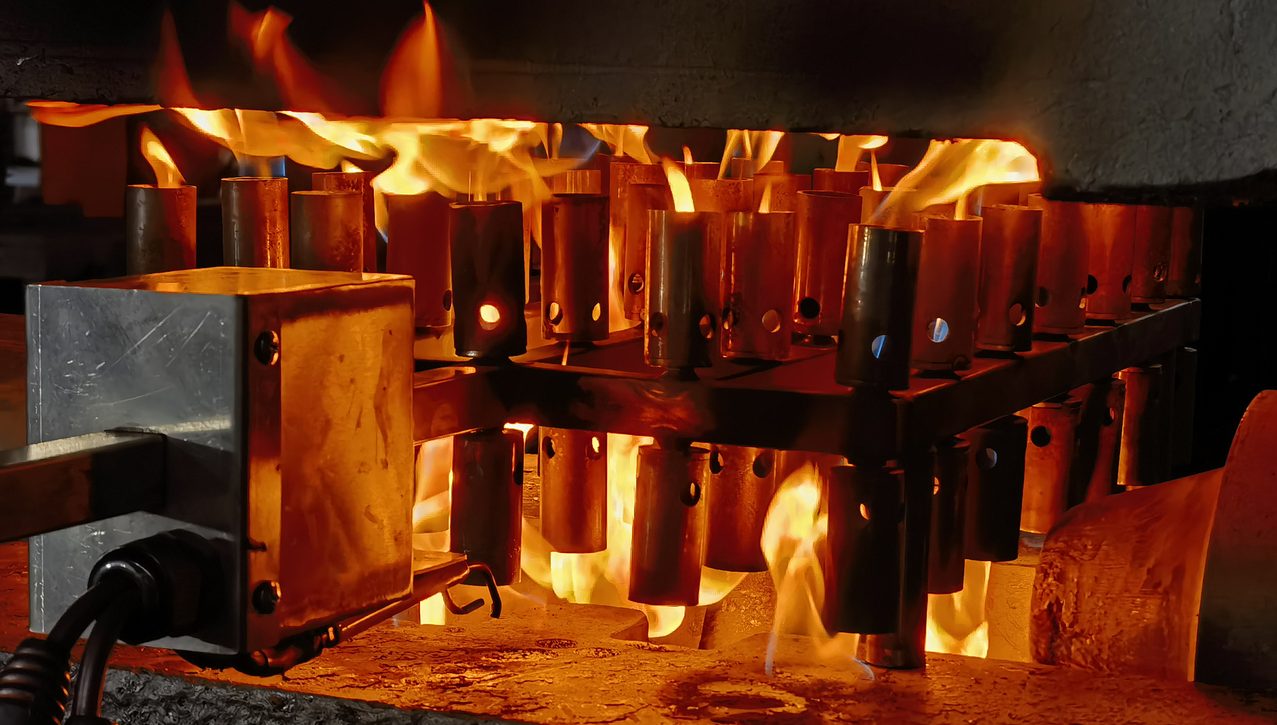
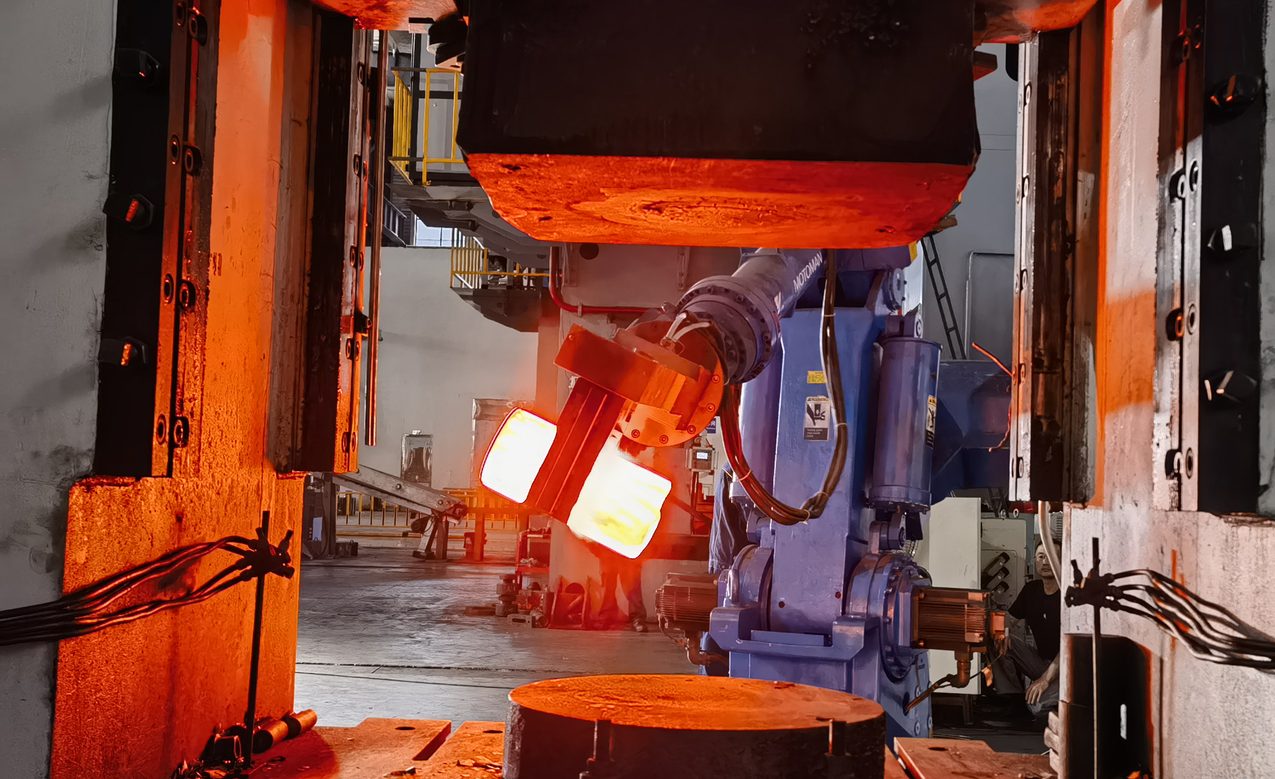
Forging starts one step later. The steel is cast first anyway, as an ingot or a continuously cast bloom, and only then reheated and worked under pressure between dies until it takes the shape of the part.
That is worth stating plainly, because it is the difference that matters: forging is not the opposite of casting. It is casting plus deformation, and the deformation is what changes the metal.
What Deformation Does to the Metal
When steel solidifies in a mould, the grains grow as dendrites and columns in the direction the heat leaves, and everything that does not freeze cleanly stays where it stopped: shrinkage porosity in the last metal to freeze, gas porosity from dissolved gas, segregation of alloying elements, and non-metallic inclusions.
Working the steel hot breaks that as-cast structure up. Deformation closes internal voids and welds them shut, recrystallisation refines the grain, and inclusions are drawn out into short stringers aligned with the direction of working. In a die forging the result is a grain flow that follows the part: the fibres bend around a bore or a web instead of being cut across.
| Cast | Forged | |
|---|---|---|
| Internal soundness | Shrinkage and gas porosity are possible; the foundry controls them by feeding, gating and inspection | Voids are closed by working; soundness comes from the process |
| Grain structure | As-cast, dendritic, with segregation | Broken up and refined; inclusions aligned with the working direction |
| Fatigue and impact behaviour | Lower, and with more scatter between castings | Higher, and the grain flow can be turned to follow the load path |
| Shape freedom | Internal cavities, thin walls, one-off shapes | Must release from a die, so simpler geometry and draft |
| Tooling | A pattern and mould; cheaper to start | A die set per part; amortised over the order |
| Grade examples | A216 WCB, A352 LCC, A351 CF8M | A105, A350 LF2, A182 F316 |
The Grade on the Drawing Tells You the Route
Every one of these materials began as a cast product, but the specification on the drawing names the product form that reaches you. Forged grades and their cast counterparts come in pairs:
| Cast specification | Forged equivalent | Material |
|---|---|---|
| A216 WCB (also WCC) | A105 | Carbon steel |
| A352 LCC / LCB | A350 LF2 | Low-temperature carbon steel |
| A217 WC6 | A182 F11 | 1¼ Cr alloy steel |
| A217 WC9 | A182 F22 | 2¼ Cr alloy steel |
| A351 CF8 | A182 F304 | 304 stainless |
| A351 CF8M | A182 F316 | 316 stainless |
| A890 CD3MN | A182 F51 | Duplex 2205 |
| A494 CW6MC | B564 N06625 | Alloy 625 |
A105, A182, A350, A182 F51 and B564 are forging specifications. A216, A217, A351, A352, A890 and A494 are casting specifications. If your drawing calls out a cast grade and the service needs a wrought part, the material has to be re-specified to its forged equivalent, and that changes the wall sections and the drawing, not only the certificate. Send the drawing with the service condition and we will say which route the part belongs on.
Where Forging Earns Its Place
- Pressure-containing parts, where a through-wall defect is a leak
- Parts loaded in fatigue: a valve body or cover sees pressure cycles for decades
- Low-temperature and impact service, where toughness is the limiting property
- Sour service, where hardness limits are part of the specification
- Parts where the grain flow can be turned to run with the stress rather than across it
- Parts that will be machined all over anyway, so the near-net shape still pays
Where a Casting Is the Better Answer
- Geometry with internal cavities or passages that a die cannot form and release
- Very large or one-off parts, where a die set would never be amortised
- Short runs of a non-critical part, where the pattern cost decides the price
- Housings and brackets where the design code allows a casting and wall thickness can carry the duty
Cost and Quantity
Tooling is the swing factor. A pattern and mould cost less than a die set, so casting wins on a first-off and on short runs. Once a die is amortised across a repeat order, the forged part is usually competitive on price and leaves the buyer with the better material. Material yield and machining allowance move the other way: a casting can be closer to final shape in some directions, while a forging is dense enough to be machined with confidence.
What We Do, and What We Do Not
We forge. We do not cast. On a casting vs forging question we give the forging side of the argument, and then the honest answer: if a part is one where a casting is the better route, a complex housing or a one-off that will never repeat, we will say so rather than quote it as a forging. What we make is valve bodies and covers, gear blanks, flanges and rings, and custom closed-die forgings from 5 kg to 520 kg, in the grades listed on the materials page. How the parts are made is set out on the closed die forging page.
What We Can Be Held To
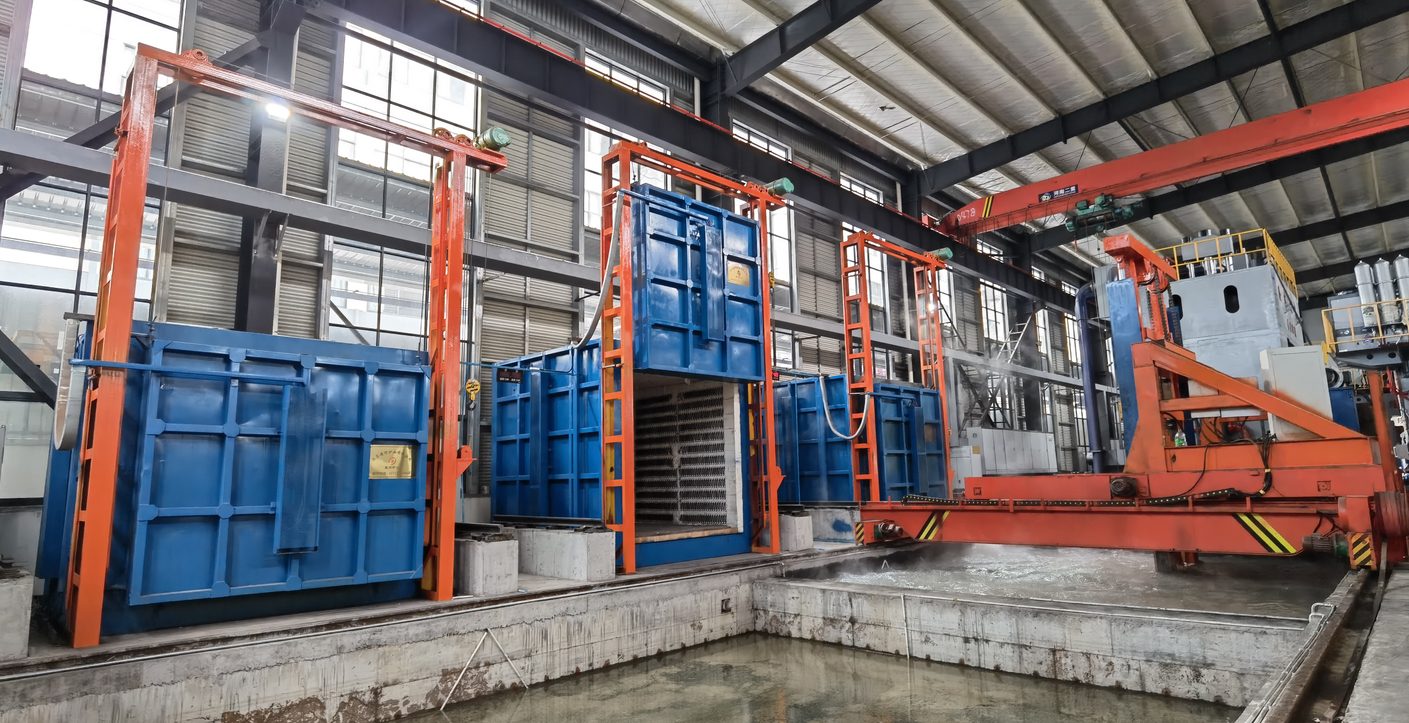
The capability behind those two sentences is what a buyer can actually check: a 6,000 T multi-directional press with presses from 2,000 tonnes up, robotic forging lines, heat treatment, machining and testing all on one site, single-piece weights from 5 kg to 520 kg, and qualifications that carry through to the paperwork: API Spec 20C, PED 2014/68/EU, AD2000-W0 and NORSOK M-650. If a part sits where a casting is the better route, we will say so; a drawing is enough for us to tell you which way it should go.
Related Reading
Frequently Asked Questions
Is forged steel stronger than cast steel?
On paper the paired grades are close: A105 and A216 WCB both carry a minimum tensile strength of about 485 MPa. The difference shows up in the part rather than on the certificate. A forging is denser, its properties scatter less from piece to piece, and it takes fatigue and impact loading better, which is why pressure-containing and safety-related parts are usually specified as forgings.
Does a forged part start as a casting?
Yes. Forging stock is an ingot or a continuously cast bloom, so a forged part has been cast and then worked. The working is what closes the porosity, refines the grain and gives the part its grain flow.
Which ASTM standards are forged and which are cast?
Forged: A105, A182, A350, A182 F51 for duplex, B564 for nickel alloys. Cast: A216, A217, A351, A352, A890, A494. The material specification on the drawing names the product form, so it also tells you which route the part is on.
Can a casting be converted to a forging?
Often, if the geometry can be made to release from a die. It is not a paperwork change: the material is re-specified to the forged equivalent, wall sections are reviewed, and the drawing is revised. Send both the casting drawing and the service condition and we will tell you whether it can be forged and what the change involves.
When is casting the cheaper route?
When the die cost cannot be spread over enough parts, when the geometry is too complex to release from a die, or when the part is not pressure-containing or fatigue-loaded. On a repeat order of a demanding part, the forged version is usually competitive once the die is amortised.
Do you cast parts as well?
No. We are a closed-die forge shop. If casting is the better route for your part, we will say so and you are better served by a foundry.