Longrui Forging is a closed die forging manufacturer in China, making parts in nickel alloys 625, 718 and 825, duplex and super duplex stainless steel in grades F51, F53 and F55, plus other stainless, alloy, carbon and structural steels, from 5 kg to 520 kg per piece. Heat treatment, testing and machining are all in house, under our NORSOK M-650 material manufacturer qualification.
Nickel Alloy Forgings: 625, 718, 825
Longrui Forging forges the three nickel alloys that come up most often in oil, gas, chemical and marine work: Alloy 625, Alloy 718 and Alloy 825. They are quoted by UNS number rather than trade name, so the grade on the drawing and on the certificate cannot be confused (Inconel and Incoloy are producers’ trademarks).
| Alloy | UNS | Forging standard | Typical use |
|---|---|---|---|
| Alloy 625 | N06625 | ASTM B564 | Seawater and subsea hardware, chemical process equipment, high-temperature parts. Solid-solution strengthened, no heat treatment needed for strength. |
| Alloy 718 | N07718 | ASTM B564 | Downhole and wellhead parts, high-temperature valve parts and fasteners. Precipitation hardening, high strength to about 650 °C. |
| Alloy 825 | N08825 | ASTM B564 | Acid and seawater service: process piping parts, tanks, marine equipment. |
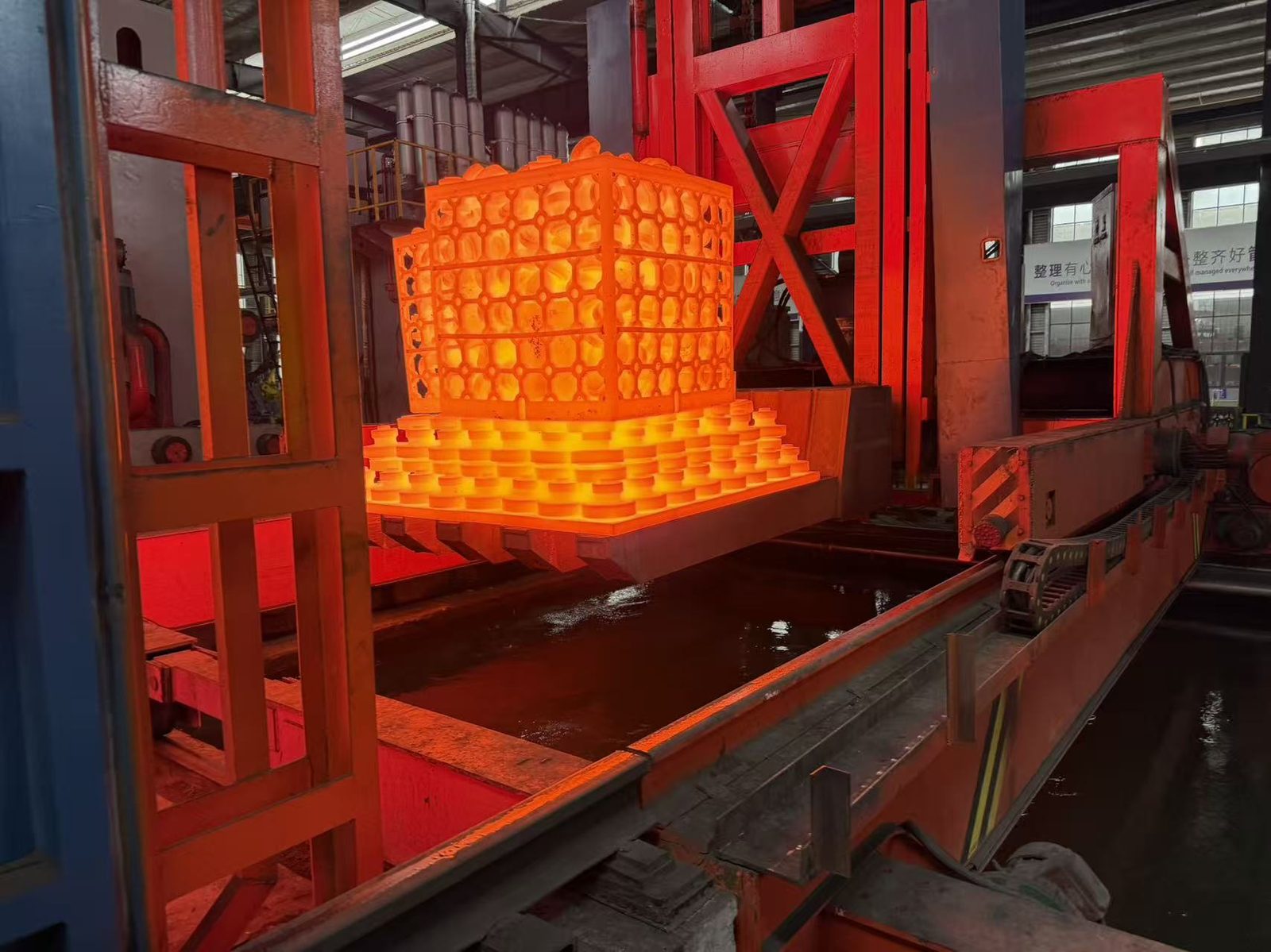
Nickel alloys are harder to forge than carbon or stainless steel. They keep their strength at forging temperature, so they need more press tonnage and closer control of temperature and reduction to hold a fine grain structure. We forge them on the 6,000 T multi-directional press, heat treat in house (solution annealing, and ageing where the grade calls for it) with recorded cycles, and test them in our own laboratory: chemical composition on every heat, tensile and yield, impact energy including low-temperature, and hardness.
For nickel alloy orders, the paperwork matters as much as the part. Composition and mechanical test reports, UT / MT / PT reports, and heat-treatment charts on request; material identity is re-verified with a handheld XRF spectrometer before packing. Equipment is listed on Capability, and the certificates offshore and oil and gas projects ask for are on API 20C & NORSOK M-650.
Grade by grade: Alloy 625, Alloy 718 and Alloy 825.
Duplex & Super Duplex Stainless Steel Forgings
Duplex stainless steels carry a mixed ferrite and austenite structure, roughly half and half. That gives them about twice the yield strength of standard austenitic grades such as 316L, with much better resistance to chloride stress corrosion cracking, which is why they are chosen for seawater, offshore and chemical service.
| Grade | UNS | ASTM designation | PREN (min.) |
|---|---|---|---|
| F51 (2205) | S31803 / S32205 | A182 F51 | ≥ 34 |
| F53 (2507) | S32750 | A182 F53 | ≥ 40 |
| F55 (Zeron 100) | S32760 | A182 F55 | ≥ 40 |
PREN is the pitting resistance equivalent number, calculated from chromium, molybdenum and nitrogen content. The higher it is, the more resistant the steel is to pitting in chloride environments: seawater service normally starts around 34, and the super duplex grades sit at 40 and above.
Where these grades are used: subsea and topside oil and gas components, valve bodies and covers, flanges, pump and manifold parts, desalination equipment and chemical process plant.
What duplex demands from a forging supplier:
- Controlled forging and heat treatment that restores the ferrite and austenite balance, in temperature-controlled furnaces with recorded cycles
- Corrosion and mechanical testing with a low-temperature impact bath in house, and documentation that holds up in an offshore audit: what M-650 and API 20C cover
Longrui Forging forges F51/F53/F55 parts regularly, for customers in oil and gas and general industry. If your part is a duplex valve body or a subsea component, send the drawing and we will assess it.
More on these grades, and what forging adds to them: Duplex & Super Duplex Forgings.
Full Material List
| Family | ASTM / ASME grades | Typical use |
|---|---|---|
| Carbon steel | ASTM A105, AISI 1045 (45#) | Valve bodies and covers, flanges, general machine parts |
| Low-temperature steel | ASTM A350 LF2 | Valves and fittings for low-temperature service, down to −46 °C |
| Alloy steel | AISI 4130, 4135 (35CrMo), 4140 (42CrMo), 5140 (40Cr); ASTM A182 F91, F92 | High-strength shafts and valve parts; F91/F92 for power station and high-temperature service |
| Stainless steel | ASTM A182 F304, F316; AISI 420 (2Cr13); ASTM A564 17-4 PH | Corrosion-resistant valve and pump parts; 420 for wear-resistant parts such as wire reels; 17-4 PH where high strength and corrosion resistance are both needed |
| Duplex / super duplex | ASTM A182 F51, F53, F55 | Offshore, subsea, desalination and chemical service |
| Nickel alloys | UNS N06625 (Alloy 625), N07718 (Alloy 718), N08825 (Alloy 825) | High-temperature and highly corrosive service, wellhead and process equipment |
| Structural steel | Q355D (≈ EN S355 / ASTM A572 Gr.50) | Structural and machinery components |
Grades we forge regularly. If yours is not on the list, ask: we will tell you honestly whether it fits our process.
Heat Treatment by Grade (Reference)
There is no single heat treatment for a forging. The cycle follows the grade, and the standards allow more than one route for the same grade, so the table below is a reference taken from the ASTM specification for each family rather than a fixed recipe. What applies to your order is what the drawing, the material specification and the purchase order call for, and we confirm it at the quotation stage.
| Grade family | Reference heat treatment | Basis |
|---|---|---|
| A105 carbon steel | Any of: as-forged with controlled cooling, annealing, normalising, normalising and tempering, or quenching and tempering. The specification does not fix which one, and the certificate shows what was done (A105N means normalised). | ASTM A105 |
| A350 LF2 low-temperature steel | Normalised, normalised and tempered, or quenched and tempered, at the manufacturer’s option, with Charpy impact testing at −46 °C. | ASTM A350 |
| A182 F11 / F12 | Normalise and temper at 1650 °F [900 °C], air cool, temper at 1150 °F [620 °C] minimum. | ASTM A182 Table 1 |
| A182 F22 | Normalise and temper at 1650 °F [900 °C], air cool, temper at 1250 °F [675 °C] minimum; full annealing is the alternative in the same table. | ASTM A182 Table 1 |
| A182 F91 / F92 | Normalise 1900–1975 °F [1040–1080 °C], air cool, temper 1350–1470 °F [730–800 °C]. On fittings with a section over 3 in., normalise and temper or quench and temper is at the maker’s option. | ASTM A182 Table 1 and 7.2.3 |
| 4130, 4135, 4140, 5140 alloy steels | Normalised, or quenched and tempered to the strength class or hardness range the drawing names. | Material spec / drawing |
| A182 F304 / F316 stainless | Solution treat and quench, 1900 °F [1040 °C] minimum, liquid quench, cooled below 500 °F [260 °C]. | ASTM A182 Table 1 |
| A182 F51 (2205) duplex | Solution treat and quench, 1870 °F [1020 °C] minimum, liquid quench, cooled below 500 °F. | ASTM A182 Table 1 |
| A182 F53 (2507) super duplex | Solution treat and quench, 1880 °F [1025 °C] minimum, liquid quench, cooled below 500 °F. | ASTM A182 Table 1 |
| A182 F55 (Zeron 100) | Solution treat and quench, 2010–2085 °F [1100–1140 °C], liquid quench, cooled below 500 °F. | ASTM A182 Table 1 |
| 17-4 PH (A564 630) | Solution treat at 1900 °F ± 25 °F [1040 °C ± 15 °C], cool as required to below 90 °F [32 °C], then age to the H condition named on the drawing (H900 through H1150): the ageing temperature is what sets the strength. | ASTM A564 Table 2 and Table 3 |
| Alloy 625 (N06625) | Solution annealed, normally 1700–1900 °F [925–1035 °C] with air quench or faster; 2000–2200 °F where creep resistance matters more than tensile properties. | ASTM B564 / alloy data sheet |
| Alloy 718 (N07718) | Solution anneal 1700–1850 °F [925–1010 °C] with rapid cool, then age at 1325 °F for 8 h, furnace cool to 1150 °F and hold to 18 h total. | ASTM B564 / alloy data sheet |
| Alloy 825 (N08825) | Annealed at 1700–1800 °F [930–980 °C], rapid air cool or water quench. | ASTM B564 / alloy data sheet |
Two things to keep in view on any of these rows. First, a standard’s figure is usually a floor or a band to work inside, not a single set point, which is why the certificate shows the actual cycle rather than just the process name. Second, the cooling rate after solution treatment matters as much as the temperature, so quench and cooling-medium temperatures are recorded for the batch. Where a project names its own cycle (Supplementary Requirement S8 in ASTM A182 is exactly that), we work to the drawing.
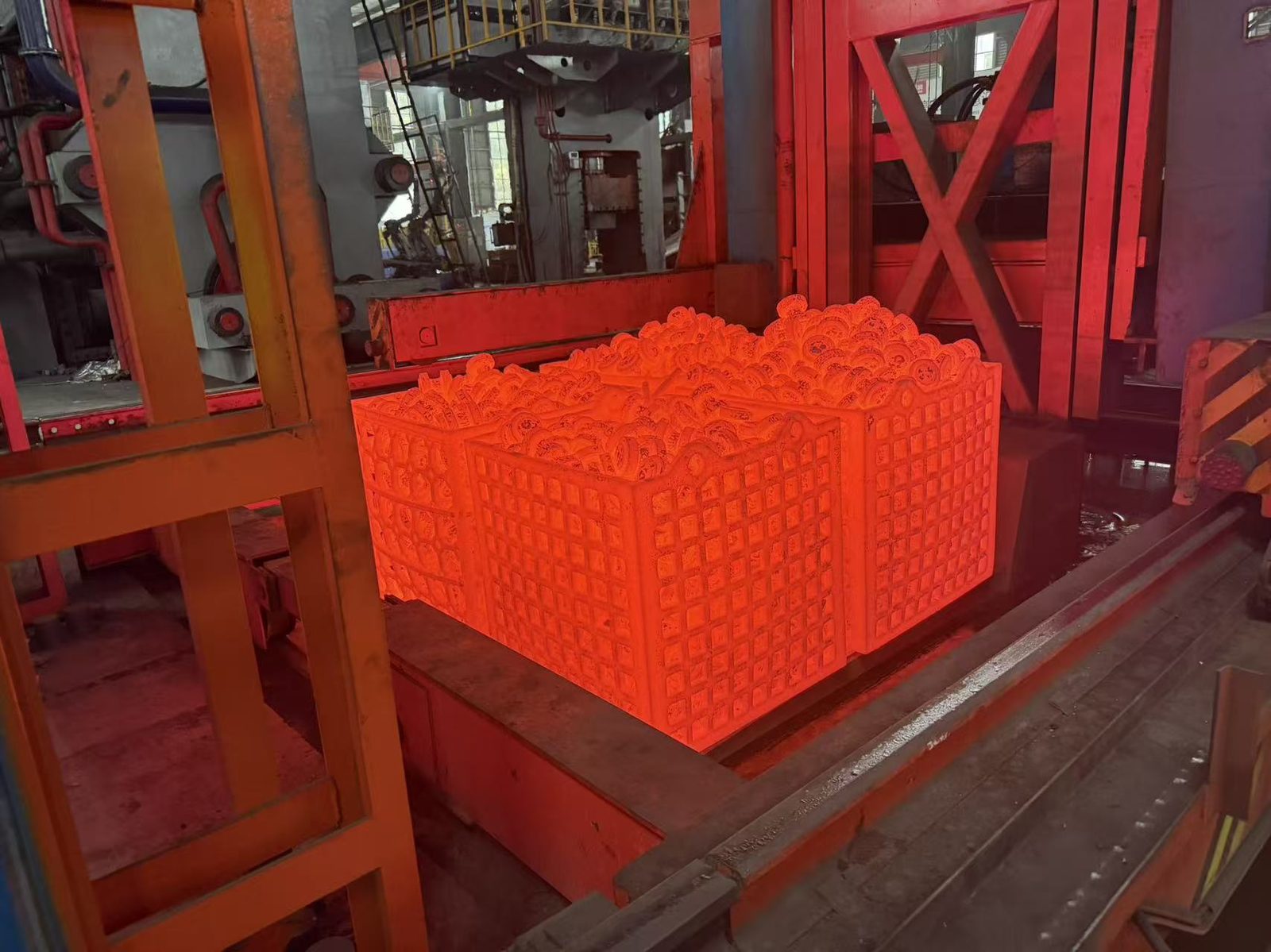
Furnace temperature and cooling-medium temperature are monitored and recorded for every batch, and the records can ship with the order.
Testing in our own laboratory:
- Chemical composition on every heat, by GNR spark optical emission spectrometer
- Tensile, yield and elongation on a servo-hydraulic universal machine
- Charpy impact energy, including a low-temperature bath
- Brinell hardness
- UT, MT, PT and VT
- Microstructure examination on a metallographic microscope
Material identity is re-verified with a handheld XRF spectrometer before packing. See Capability for the full equipment list.
Why These Grades Are Forged
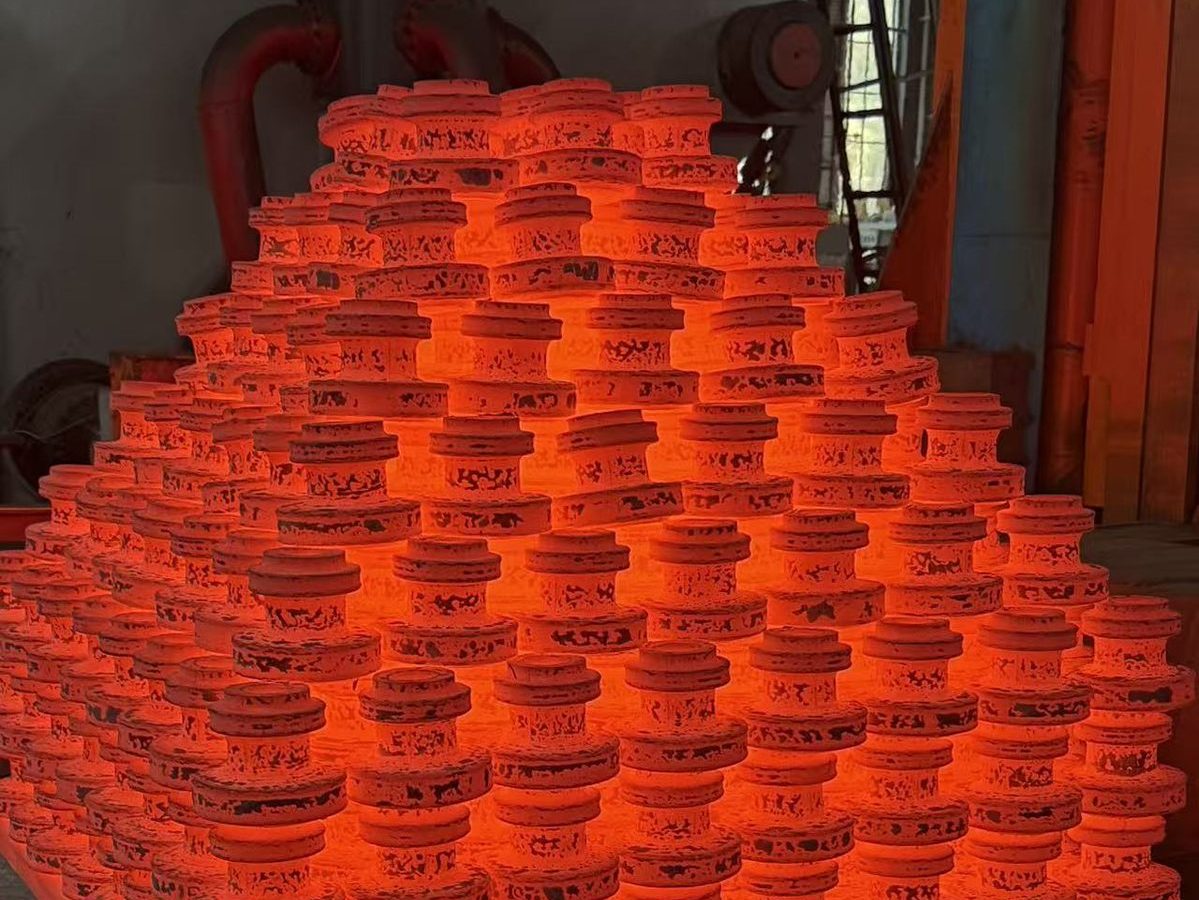
The grades on this page are chosen for a pressure boundary, a corrosive service or a temperature duty, and each of those duties punishes exactly the defects a forging is good at removing. The closed die forging page covers the metallurgy; the practical consequence is simpler: the metal is worked through its section before anyone tests it, and the part reaches the machine shop close to size, which counts for grades that cost a lot per kilo and cut slowly. Heat treatment is then matched to the family rather than run to one recipe, in our own furnaces, with the cycle recorded.
Special Steel Forgings: What the Material Demands, and How We Forge It
A special steel enquiry starts like any other. A valve project specifies duplex 2205, super duplex or a nickel alloy; the drawing shows a bore, a flange and a wall thickness, all of them familiar. Then the part meets the press, and the material starts making its own rules.
Grades like these are specified for one reason: the service is too punishing for carbon steel. Duplex and super duplex for chloride and seawater duty, nickel alloys such as 625, 718 and 825 for sour gas and chemical process, creep-resistant grades for high-temperature steam. The grade decision is made on corrosion charts and service temperatures, and it cannot be undone later by clever sourcing.
Forging is where these grades separate the suppliers, and the material does not warn you. Four things decide whether a special steel forging comes out sound, and every one of them is settled in the plant, long before anyone gets to inspect the part:
The temperature window. Duplex and super duplex only forge well inside a narrow band. Go above it and the ferrite-austenite balance the grade depends on starts to drift; go below it and cracks open at the edges, where carbon steel would simply deform.
The force it takes. Alloy 625 is the classic case: it flows poorly in the die and resists the press even when hot. Many forges turn out 625 parts with cracks. Our parts leave the press without cracks, as routine work.
The cooling that follows. After the last stroke, duplex parts are solution treated and cooled at a controlled rate, so the ferrite and austenite return to their intended balance. Cool too slowly and intermetallic phases begin to form; the rate matters as much as the temperature.
The heat treatment. It decides the part a second time. In 718, the controlled ageing cycle builds the final strength; in F91-class steels, normalize and temper must land inside a tight range, with the cooling rate recorded alongside. The certificate should tell you the actual cycle that ran, not just that the part passed.
This is why we keep the whole chain under one roof. Longrui forges special steel on three multi-directional presses of 6,000 T, 3,000 T and 2,000 T, for parts from 5 kg to 520 kg, and we make our own dies, heat treat, test and machine in the same plant. Duplex and super duplex valve bodies and covers are standard business here, and the quality system is built for these materials: NORSOK M650 qualification as a manufacturer of special materials, an API Spec 20C licence, No. 20C-0051, covering corrosion-resistant alloys and duplex stainless steel, and PED 2014/68/EU certification through TÜV NORD.
The paperwork follows the part. Chemical composition is verified on every heat before forging, and finished parts are tested in our own laboratory: tensile, impact with a low-temperature bath, hardness and ultrasonic inspection, with a handheld XRF re-checking material identity before dispatch. An EN 10204 3.1 inspection certificate ships as standard with duplex orders, the heat number traceable through every result.
If your next project specifies a special grade, send the drawing early. We check die-forging feasibility against the presses, work out tooling, heat treatment and testing, and usually reply with a quotation within 24–48 hours. And if a part does not suit a die forge, we will tell you that before you spend time on it.
Frequently Asked Questions
Do you forge nickel alloys such as 625, 718 and 825?
Yes. Alloy 625 (UNS N06625), Alloy 718 (N07718) and Alloy 825 (N08825) are forged to ASTM B564 requirements, in the same weight range as our other forgings, 5 kg to 520 kg. Nickel alloys need more press force and closer temperature control than carbon or stainless steel, which is why we keep them on the 6,000 T multi-directional press and heat treat them in house.
Which duplex grades do you forge?
F51 (UNS S31803/S32205, 2205), F53 (UNS S32750, 2507) and F55 (UNS S32760, Zeron 100), forged to ASTM A182 requirements. We also forge the matching stainless and nickel grades for the same projects.
What is PREN and why does it matter?
PREN (pitting resistance equivalent number) is a calculated value from the chromium, molybdenum and nitrogen content of the steel. It ranks how well a grade resists pitting corrosion in chloride service. Standard duplex F51 sits at 34 and above; super duplex F53 and F55 at 40 and above.
Do you supply material certificates and test reports?
Yes. Chemical composition and mechanical test reports, UT / NDT reports, and heat-treatment charts on request. Documents travel with the shipment, and copies are available for tender packages. What each document type means, and how to read a mill certificate, is set out on the material certificate page.
Can you forge a material that is not on your list?
Often yes. Send the grade and specification with your drawing and we will confirm feasibility and availability of the steel before quoting.
What is the smallest and largest part you can forge?
Parts from 5 kg on the 2,000 T press up to 520 kg on the 6,000 T press, with machining capability to Ø600 × 1000 mm.
How fast can I get a quotation?
Usually within 24–48 hours of receiving a drawing or specification through the RFQ form or at sales@longruiforging.com.
Send the grade and the drawing, and we will come back with feasibility and price.