A gear blank is the forged body a gear is later cut from. The teeth are cut, not forged. What gear forging decides is everything under them: the grain flow, the density, and whether the finished tooth root has a fibre direction running with the load or across it.
Longrui Forging forges gear blanks, rings and gear shafts by closed-die forging, from 1045, 35CrMo, 42CrMo and 40Cr up to 520 kg per piece, supplied as-forged, rough machined, or with the teeth cut and ground to your drawing.
What We Forge
- Gear blanks for spur, helical and bevel gears, plain or with a finished bore
- Gear rings and ring blanks for larger diameters
- Gear shafts and pinion blanks, forged with the shaft and the gear body in one piece
- Wind-turbine gear shaft forgings
- Supplied as-forged with flash trimmed, normalised, turned and bored to drawing, or with the teeth cut and ground
- The blank is turned, faced and bored inside a Ø600 × 1000 mm envelope; heaviest piece to date is 520 kg
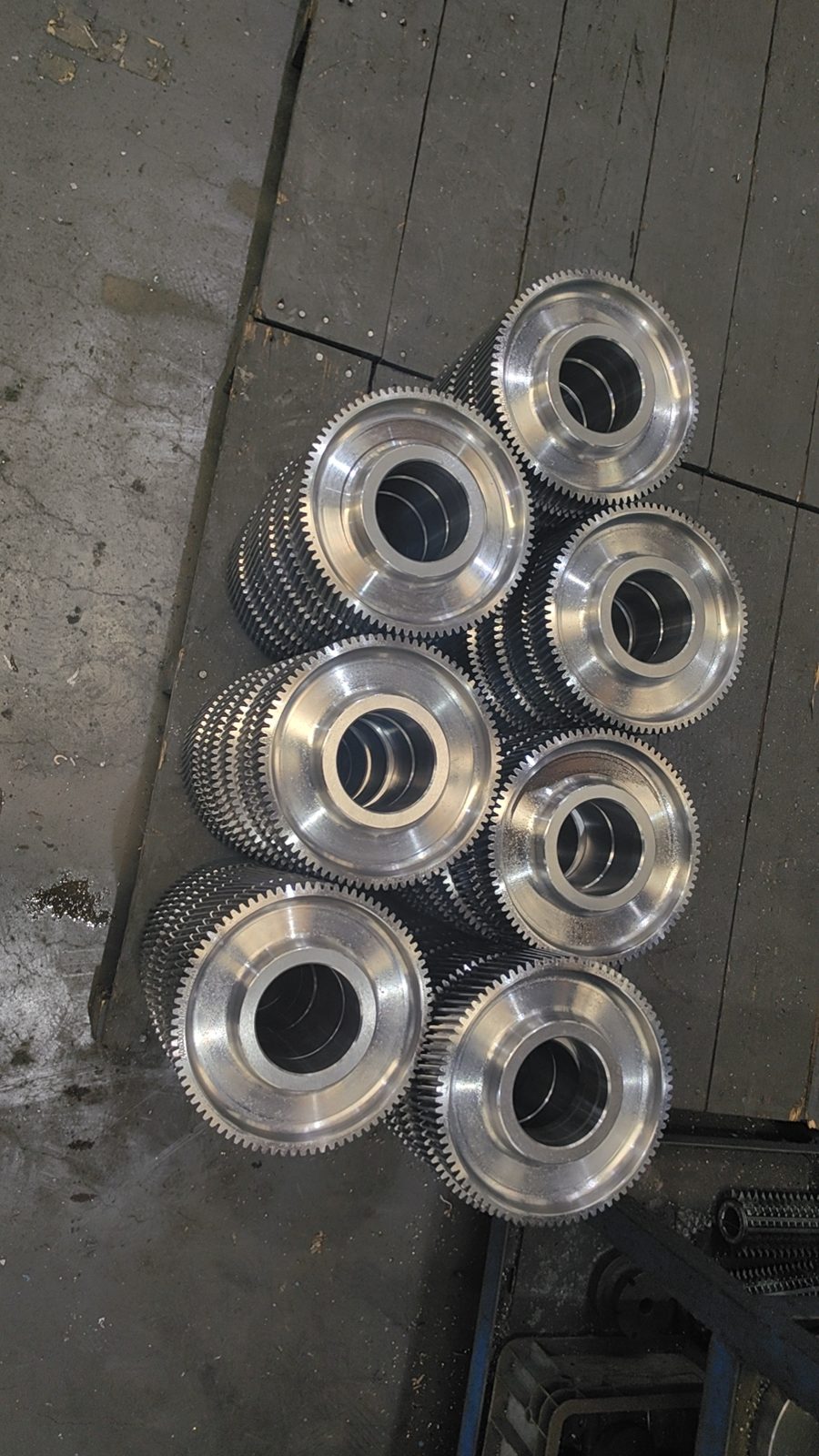
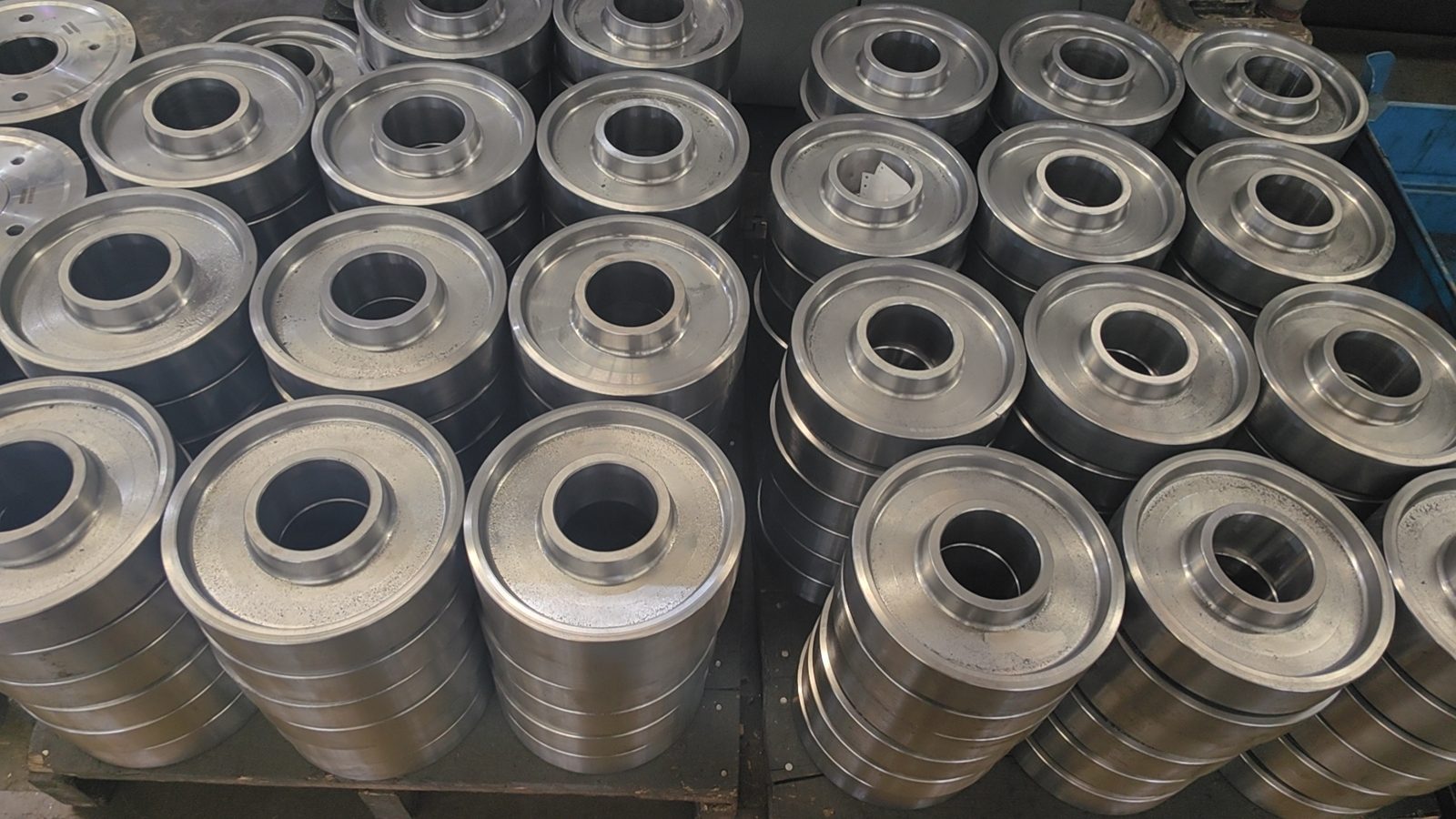
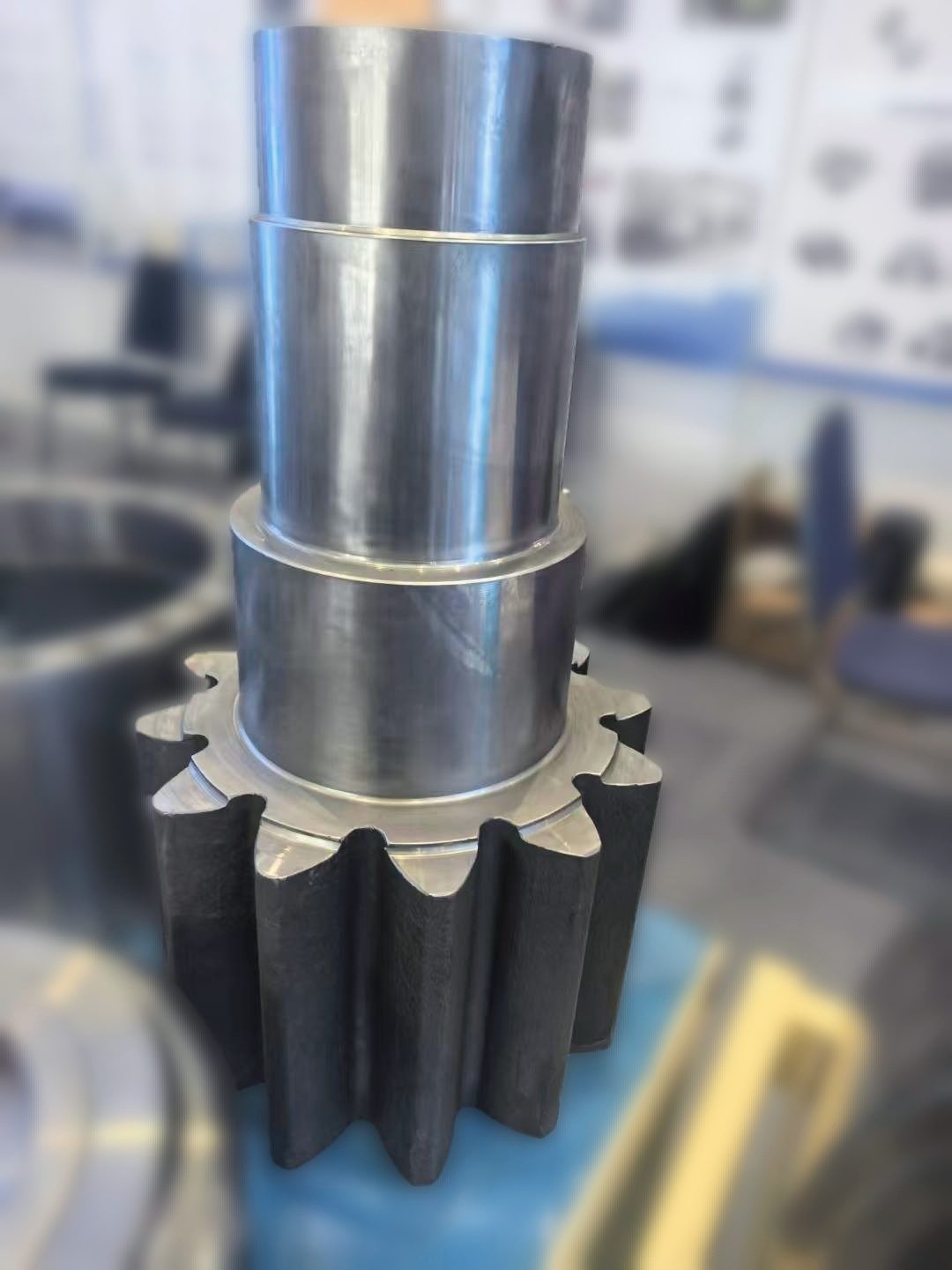
Blank, or Finished Gear?
Buyers ask this in the first email, so it is worth answering plainly. We forge the blank, and we can take it through to a cut gear: hobbing, shaping and grinding to your drawing. Customers who cut their own teeth take the blank, and that works just as well.
| Stage | Who does it |
|---|---|
| Billet cut to weight, forged and flash trimmed | Longrui |
| Normalising or quench and temper | Longrui |
| Rough machining, boring, face and OD turned | Longrui |
| Tooth cutting, hobbing, shaping or grinding | Longrui |
| Case hardening, nitriding, tooth grinding | Longrui |
Where the teeth are cut is where a forged gear earns or loses its advantage. We cut them from a blank whose allowance, hardness and internal soundness we control, so the tool reaches clean metal and the fibre sits the right way under the tooth root. If you would rather cut the teeth in your own shop, we supply the blank with the allowance your cutter needs.
Why a Forged Blank and Not a Cut Bar
A gear cut from round bar has the bar’s grain running straight down the part. A forged blank has grain that follows the shape: as the metal flows into the die, the fibre lines bend around the bore and along the web, and they stay that way through heat treatment.
In service the load at the tooth root is reversed millions of times. Cracks start where the fibre is cut across its length. A blank forged to near-net shape puts fibre along the section instead, which is why the same steel, the same hardness and the same tooth geometry can give a longer fatigue life when it started as a forging.
There is a second effect worth knowing. Forging closes internal porosity from the ingot, so ultrasonic testing means something. On a sawn bar you are testing the mill’s product; on a forging you are testing a part that has been worked through its whole section.
What We Need on the Drawing
A gear drawing is a finished-part drawing, so the working information is what is left after the teeth. Send:
- blank envelope: outside diameter, face width, overall length
- bore diameter and whether it is finish-machined by us or left as-forged for your own finishing
- web and hub proportions, if the blank is not a simple disc
- tooth data or the finished drawing, so we can work back to the blank allowance
- material grade and heat treatment condition
- any NDT or hardness requirement
Where the tooth data is not fixed yet, we can work from the finished part envelope and quote the blank. Where it is fixed, we work the allowance backwards from the tooth root so the cutter has clean metal to take.
Grades
The common gear blank grades are the ones we already forge for other parts: AISI 1045 for general service, 4135 (35CrMo) and 5140 (40Cr) where more core strength is wanted, and 4140 (42CrMo) for higher-loaded gears and larger sections. Where the finished gear will be case hardened, tell us at enquiry stage, because it changes the heat treatment we apply to the blank. Forgings that see seawater or process fluids can be made in F304, F316, F51, F53 or F55. The full list, with service conditions, is on the materials page.
Ordering
Any drawing format works: PDF, DWG or STEP. Add the quantity and the condition you want the blank in. Feasibility, tooling and price usually come back inside 24–48 hours of the drawing arriving, and we say so early if the part does not suit a die forge. Custom shapes are our normal business rather than a special case. What we need for any part is on the contact page.
One Plant for the Whole Sequence
A gear blank only becomes useful when the blank, the heat treatment and the machining allowance all line up before the first tooth is cut. That sequence sits in one plant here: billet cut to weight, forging on presses from 2,000 to 6,000 tonnes, normalising or quench and temper, rough machining to the envelope your cutter needs, and the testing that documents it, under our ISO 9001 system with the oil and gas qualifications held alongside it. Send the finished-part drawing and we will work the blank back from the teeth.
Frequently Asked Questions
Do you cut the gear teeth?
Yes. On top of the forged blank and the rough machining above, we cut, shape and grind the teeth to your drawing; if a gear falls outside what we can work, we say so at the quotation stage. Customers who prefer to cut their own teeth order the blank only, and that scope is quoted the same way.
What is a gear blank, exactly?
It is the forged body the teeth are cut into: a disc, a ring or a shaft with the gear body forged on it. It arrives with the right allowance so the cutter has clean, sound metal to remove.
Which grades can you forge gear blanks in?
1045, 4135 (35CrMo), 5140 (40Cr) and 4140 (42CrMo) cover most gears. For corrosive service, F304, F316, F51, F53 and F55 are also available.
What is the largest gear blank you can forge?
Single forgings up to 520 kg, machined within Ø600 × 1000 mm. Ring blanks can go wider than a solid blank of the same weight, so send the dimensions and we will confirm against the press.
As-forged or rough machined?
Both, and there is a third option. Plenty of gear shops take the as-forged blank and do all the machining themselves; others want us to turn the OD, face it and bore it first; and some want the teeth cut and ground as well. Say which, and we quote that scope.
Can you forge a gear shaft with the pinion in one piece?
Yes, and it is usually the better answer than a separate gear pressed onto a shaft. Forging the shaft and gear body as one piece removes a joint that would otherwise have to transmit the full torque.
What drives the price?
Grade and size, the heat treatment condition, how much machining you want us to take on, NDT scope and order quantity. Send the drawing through the RFQ form or to sales@longruiforging.com; quotations usually go out inside 24–48 hours.
Feasibility, tooling and price inside 24–48 hours of the drawing arriving.