Grade 91, written as ASTM A182 F91 in the forging specification, is a 9 % chromium steel with molybdenum plus small, tightly controlled additions of vanadium, niobium and nitrogen. That makes it a modified 9Cr-1Mo-V steel, UNS K90901, with the highest allowable stresses of the chrome-moly family. Longrui Forging forges F91 into valve bodies, covers, flanges, ring parts and fitting blanks from 5 kg to 520 kg per piece, in Yunhe County, Zhejiang, China.
Grade 91 is why modern supercritical power plants can run the steam hotter: the vanadium, niobium and nitrogen form fine carbo-nitrides that pin the microstructure in place at temperature, so the steel holds its strength where 2.25Cr-1Mo (F22) starts to give up. The price of that performance is discipline, because the properties live in the heat-treated structure rather than in the chemistry alone.
What F91 Is
F91 is a martensitic chrome-moly steel, not a stainless steel. The 9 % chromium gives it oxidation resistance at high temperature, and the micro-alloys give it creep strength. It is normalised and tempered before it is used, and that treatment is part of the specification rather than a finishing step.
| Element | Range (%) | Element | Range (%) |
|---|---|---|---|
| Carbon | 0.08 – 0.12 | Chromium | 8.0 – 9.5 |
| Manganese | 0.30 – 0.60 | Molybdenum | 0.85 – 1.05 |
| Silicon | 0.20 – 0.50 | Vanadium | 0.18 – 0.25 |
| Phosphorus | 0.020 max | Niobium (Cb) | 0.06 – 0.10 |
| Sulfur | 0.010 max | Nitrogen | 0.030 – 0.070 |
| Nickel | 0.40 max | Aluminium | 0.02 max |
Grades and designations that all point at the same material: UNS K90901, EN 1.4903 (X10CrMoVNb9-1), Grade 91, and F91 when it is a forging. Density is quoted between 7.6 and 7.8 g/cm³ in supplier data sheets, which is close enough for weight estimation but not a number to put on a drawing.
F91, P91, WP91 and C12A: Which Designation Applies
This comes up in almost every Grade 91 enquiry, and the answer decides which property table the inspector will use:
| Designation | Standard | Product form |
|---|---|---|
| F91 | ASTM A182 | Forgings: valve bodies, flanges, forged fittings, ring parts |
| P91 | ASTM A335 | Seamless pipe and tube |
| WP91 | ASTM A234 | Wrought butt-welding fittings |
| C12A | ASTM A217 | Castings |
One chemistry runs through all four, so a line from the header to the turbine stop valve is the same material throughout. What changes is the product standard, and with it the acceptance tables: A182 F91 requires 415 MPa minimum yield and 620 MPa minimum tensile in the forging, while the pipe grade A335 P91 carries the same yield at a 585 MPa tensile minimum. If an enquiry quotes the 585 figure for a flange, that is the pipe table being applied to a forging, and it is worth settling before the order rather than at goods-in.
Mechanical Properties and the Hardness Window
| Property | ASTM A182 F91 minimum |
|---|---|
| Yield strength (0.2 %) | 415 MPa (60 ksi) |
| Tensile strength | 620 MPa (90 ksi) |
| Elongation in 50 mm | 20 % |
| Reduction of area | 40 % |
| Brinell hardness | 190 – 248 HBW |
Hardness is watched from both sides on this grade, and both sides mean something. Too hard points to untempered martensite left in the part, which is a cracking risk in service; too soft points to over-tempering that has already spent part of the creep strength the grade was bought for. That is why F91 is normally ordered with a hardness survey on each piece or each lot, and why the heat treatment record travels with the certificate.
When F91 Is Not the Answer
- Below roughly 550 °C. Grade 91 is bought for creep strength. In a line that never gets hot, F22 or F11 does the job for less money and with a much wider welding envelope.
- Wet or chloride-bearing service. Chromium alone does not make a stainless steel. Where the duty is corrosion rather than temperature, the answer is a stainless or duplex grade, not a 9Cr steel.
- Where nobody will control heat treatment. F91 that is welded with the wrong procedure, or tempered at the wrong temperature, loses the properties that justified it. Projects that specify F91 expect documented heat treatment, hardness surveys and PWHT discipline from every supplier in the chain.
- Thin sections that do not need it. The strength advantage shows up in wall thickness and weight. On a small, lightly loaded part it has nothing to buy.
What We Forge in F91
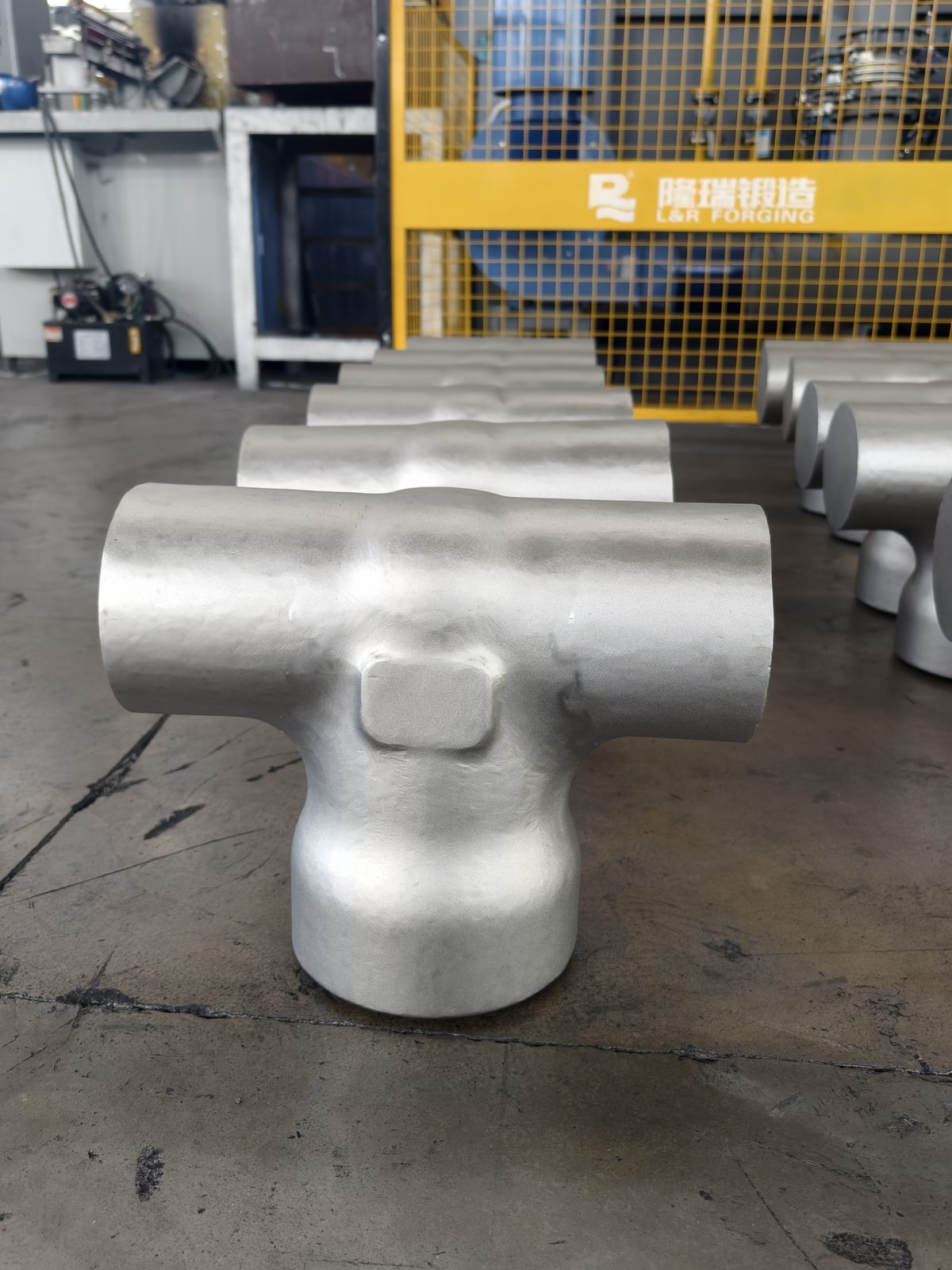
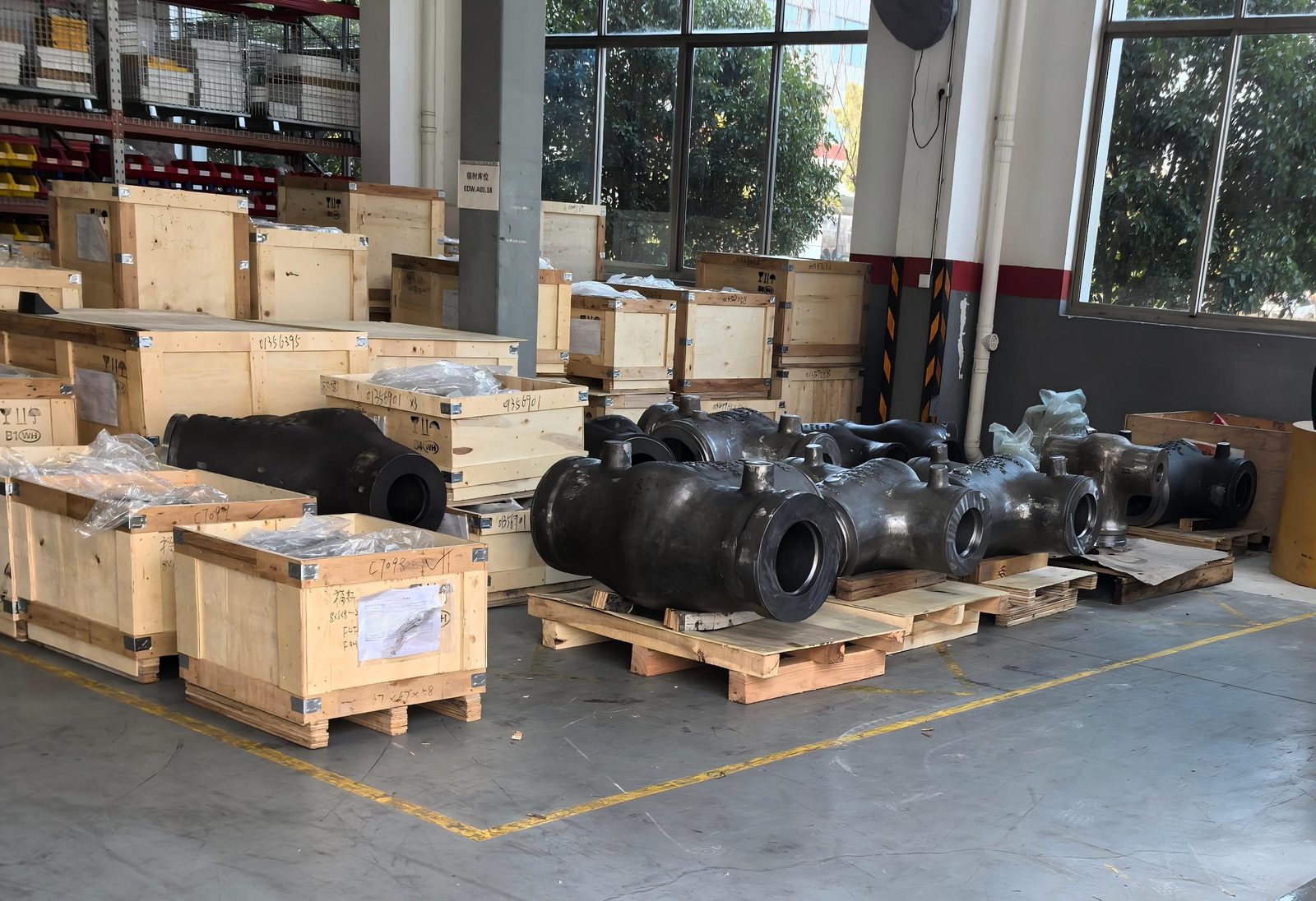
- Valve bodies and covers for high-temperature steam and power-station service
- Flanges and ring parts to ASME B16.5 and project dimensions
- Fitting blanks and machined components to drawing
- 5 kg to 520 kg per piece, on presses from 2,000 T to the 6,000 T multi-directional press
- Supplied as-forged, rough machined, or finish machined to drawing, with dimensional reports on machined parts
- UT, MT, PT and VT testing, with test scope agreed on the order
Forging and Heat Treatment Control
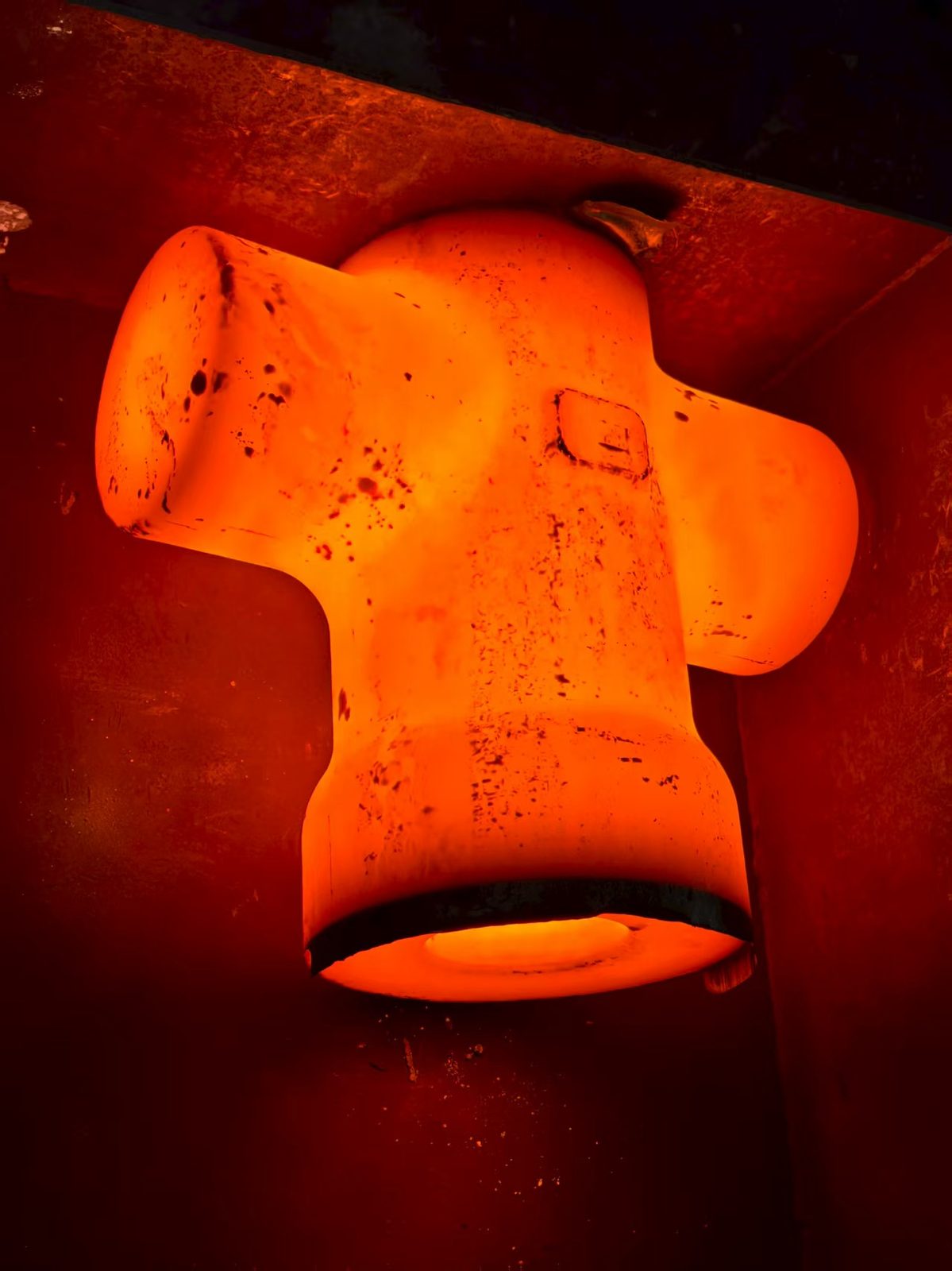
Grade 91 has a narrow forging window. It resists deformation at temperature, so it needs press capacity and a crew that works the part in one heat rather than reheating it repeatedly. After forging, the part is normalised and tempered to build the structure the grade is specified for, with furnace temperature and cooling monitored and recorded for each batch.
What we control on an F91 order:
- Forging temperature range held and recorded, with no working below the minimum
- Normalised and tempered to the ASTM A182 Table 1 cycle for F91: normalise 1900–1975 °F [1040–1080 °C], air cool, temper 1350–1470 °F [730–800 °C], on a recorded cycle; where the purchase order names its own tempering temperature, we work to that
- Hardness checked after heat treatment, not in place of it
- Chemistry verified on our own spectrometer for every heat, including the vanadium, niobium and nitrogen additions that separate Grade 91 from plain 9Cr-1Mo
- UT and surface examination before dispatch, with the scope agreed up front
Standards, Documents and Testing
F91 forgings are made to ASTM A182, the specification for forged or rolled alloy and stainless pipe flanges, fittings, valves and parts for high-temperature service. Pipe is ordered to A335, fittings to A234 and castings to A217; the same material arrives under each, and the certificate names the standard it was made to.
An EN 10204 3.1 inspection certificate is what we issue as standard with an F91 order; where the project calls for witnessed testing, a 3.2 countersigned by an outside inspector is provided on request and quoted as a separate item. Chemical composition and mechanical test reports, heat treatment charts and hardness surveys travel with the shipment, and the heat number is traceable from billet to dispatch. Testing equipment and the full certificate set are on Capability and Certifications.
Related Reading
Frequently Asked Questions
What is F91 material?
F91, UNS K90901, is the ASTM A182 forging designation for Grade 91: a 9 % chromium, 1 % molybdenum steel modified with vanadium, niobium and nitrogen. It is a martensitic chrome-moly steel for high-temperature service, used mainly for supercritical and ultra-supercritical steam piping components. The European designation is 1.4903, X10CrMoVNb9-1.
What is the difference between F91 and P91?
Product form and the standard that governs it. F91 is the forging designation under ASTM A182, used for valve bodies, flanges and forged fittings. P91 is the seamless pipe and tube designation under ASTM A335. The chemistry is the same family, so components in both designations are used in one line, but the mechanical property tables differ: A182 F91 requires 620 MPa minimum tensile, A335 P91 requires 585 MPa.
F91 or F22, which should I specify?
It comes down to service temperature and wall thickness. F22 (2.25Cr-1Mo) is a conventional chrome-moly steel for the lower end of the high-temperature range, with an easier welding and heat treatment envelope. F91 holds much higher allowable stress at the same temperature, so it allows thinner walls and lighter components, at the cost of much stricter heat treatment and hardness control. Below about 550 °C there is usually no reason to pay for F91.
What are the mechanical properties of ASTM A182 F91?
Minimum yield strength 415 MPa (60 ksi), minimum tensile strength 620 MPa (90 ksi), elongation 20 % in 50 mm, reduction of area 40 %, and a Brinell hardness window of 190 to 248 HBW. Hardness is specified as a range on purpose: both ends of it carry information about the heat treatment.
Can you forge F91 valve bodies and flanges?
Yes. F91 is one of the high-temperature grades we forge regularly, alongside F22 and F92. We forge bodies, covers, flanges, ring parts and fitting blanks from 5 kg to 520 kg, heat treat them on a recorded cycle, check hardness after heat treatment, and test before dispatch. Send the drawing with the grade, the standard and the test scope and we will quote it.
What heat treatment does F91 need?
Normalising and tempering to the cycle in ASTM A182 Table 1: normalise at 1900–1975 °F [1040–1080 °C], air cool, then temper at 1350–1470 °F [730–800 °C]. The purpose is to produce the tempered martensitic structure the grade’s strength depends on and to leave no untempered martensite behind. The standard also allows quench and temper for F91 fittings with a section over 3 in., at the maker’s option, and a purchase order can name its own cycle under the specification’s supplementary requirements. A hardness check after heat treatment confirms the result, and the record ships with the certificate.
Does the certificate show the vanadium, niobium and nitrogen?
Yes. Those three elements are what make Grade 91 different from plain 9Cr-1Mo, so they are part of the chemical analysis reported on the certificate, per heat, from our own spectrometer rather than a supplier’s paper analysis.