A duplex stainless steel is a two-phase material: about half ferrite, half austenite. The result is a grade family with roughly twice the yield strength of 316L, and far greater resistance to chloride stress corrosion cracking, which is what puts duplex on seawater, subsea, desalination and chemical duty.
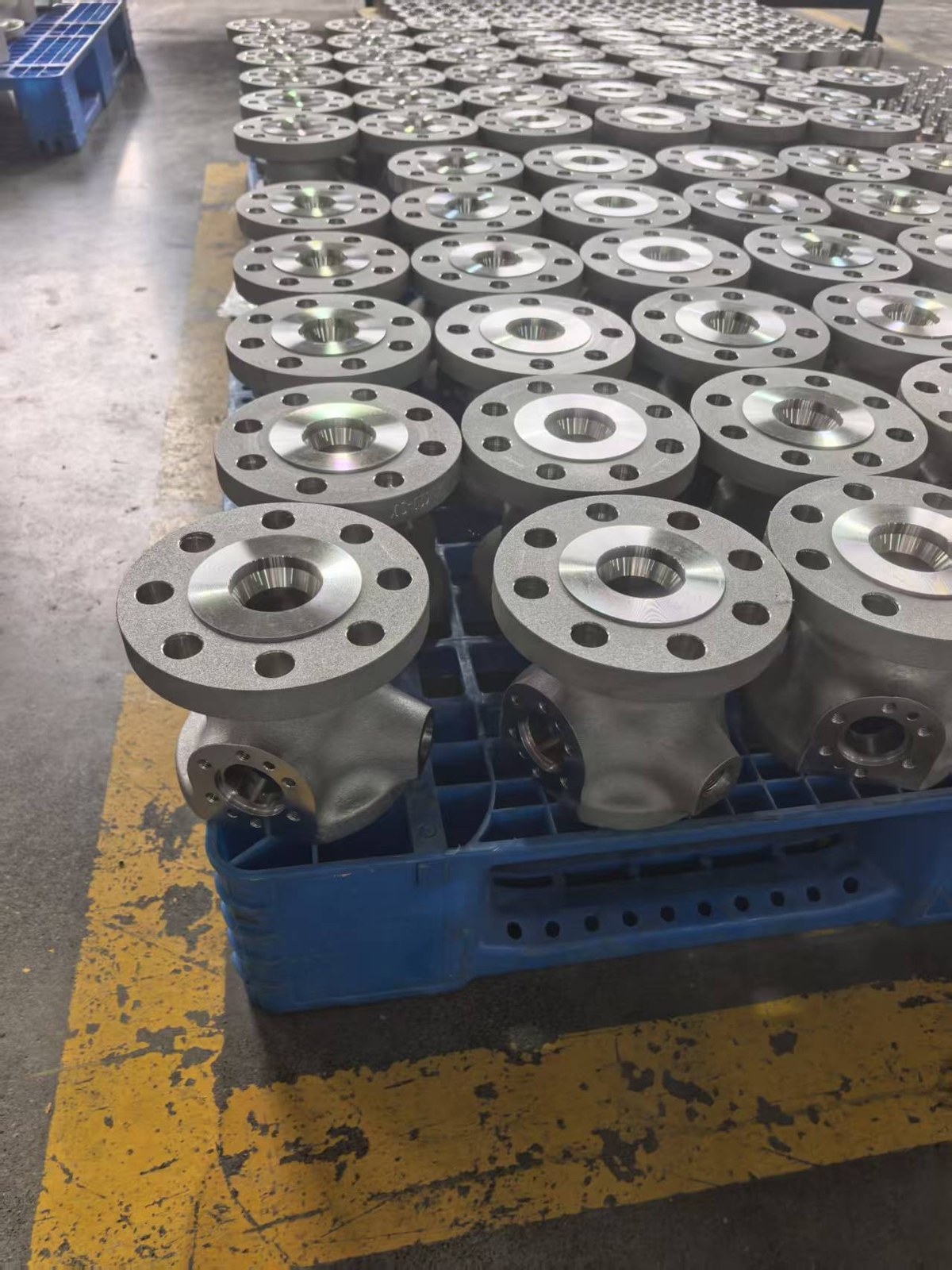
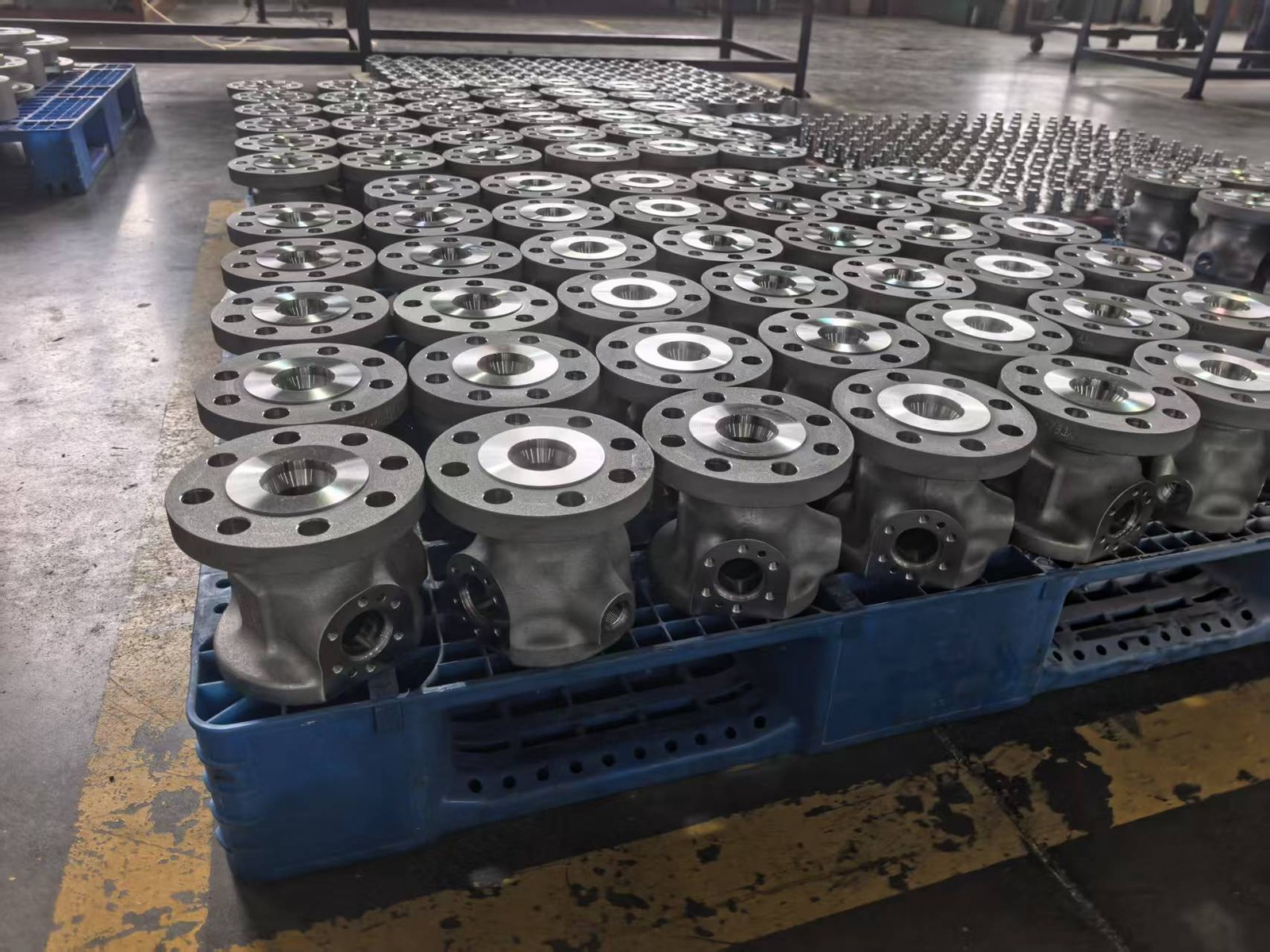
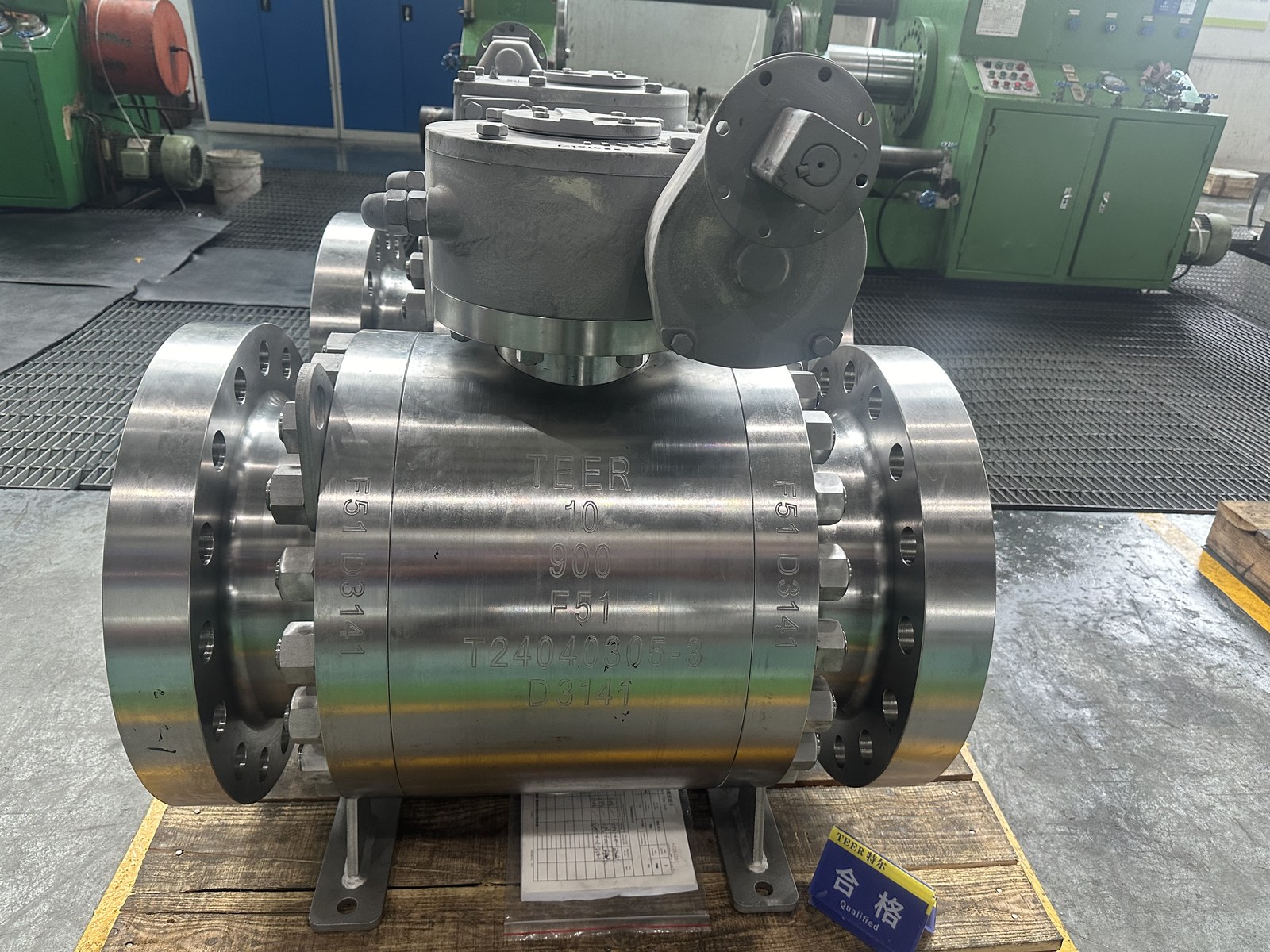
Longrui Forging forges duplex valve bodies, covers, flanges, hubs and general parts in F51, F53 and F55, between 5 kg and 520 kg per piece, on the 6,000 T multi-directional press. Forging, solution treatment and testing sit under one roof, under our NORSOK M-650 material manufacturer qualification.
Which Duplex Grade Is Which
The grade call-outs below are the ASTM A182 designations, which is what most duplex drawings carry. The commercial names in brackets are the ones buyers use in conversation.
| ASTM grade | UNS | Commercial name | Minimum PREN |
|---|---|---|---|
| F51 | S31803 / S32205 | 2205 | ≥ 34 |
| F53 | S32750 | 2507 | ≥ 40 |
| F55 | S32760 | Zeron 100 | ≥ 40 |
Two points on the first row, because they come up in almost every duplex enquiry:
- F51 is the original 22% chromium duplex. The composition was later tightened at the top of the range to improve pitting resistance, and that tightened version is F60 (UNS S32205). S32205 can be dual certified as S31803, but not the other way round. If your drawing says F51 and the mill certificate says S32205, the material is to the tighter specification, not a substitution.
- PREN, the last column, is worked out from the chromium, molybdenum and nitrogen content and ranks how well a grade resists pitting in chloride service. Seawater duty usually starts at 34; the super duplex grades are specified from 40 upward.
Where Duplex Fits, and Where It Does Not
Duplex is the right answer for chloride-rich, wet and moderately warm service: subsea and topside oil and gas parts, desalination plant, chemical process equipment, and valve bodies that see seawater or produced water.
It is the wrong answer above a certain temperature, and this is worth knowing before the grade is fixed:
- 475 °C embrittlement. Above roughly 300 °C the ferrite phase begins to separate, and the effect is worst at about 475 °C. The formation range is generally quoted as 300 to 525 °C, so duplex has a ceiling on service temperature.
- The ceiling is not one number. Suppliers publish maximum service temperatures for 2205 between about 250 °C and 315 °C, depending on the mill and the design code. The applicable pressure vessel code governs; where the service temperature is close to the limit, tell us and we will work to the code your project names.
- Sigma phase. Between roughly 700 °C and 950 °C, slow cooling lets intermetallic phases form inside the steel. They cut both toughness and corrosion resistance, and super duplex grades are the most sensitive. This is a processing risk as much as a service risk, and it is the reason the cooling rate after solution treatment matters so much.
- Low temperature. Duplex goes through a ductile to brittle transition, unlike austenitic stainless. Offshore specifications typically call for impact testing at −46 °C, and −80 °C is about the lowest anyone normally goes.
What Duplex Demands in the Forge
Duplex is forged in a narrower band than carbon or austenitic steel, and the two things that decide whether a duplex forging is sound happen either side of the press:
- Heating and working temperature. The billet is held and worked inside a window that avoids the intermetallic range, with the temperature monitored rather than estimated, batch by batch.
- Solution treatment and cooling. After forging, the part is solution treated and cooled at a controlled rate, so the ferrite and austenite come back to their intended balance instead of partly transforming.
- Verification. Chemical composition on every heat, tensile and yield, impact energy including a low-temperature bath, Brinell hardness and ultrasonic testing, all in our own laboratory. Furnace and cooling records can travel with the order.
- Paperwork. Offshore and oil and gas projects audit the documents as closely as the part. Our API Spec 20C licence and NORSOK M-650 qualification are what those audits look for; both are set out on the certifications page.
2205 or 2507: How to Choose
Most duplex enquiries come down to this comparison. The table is the short version of the decision; the full material range is on the materials page.
| Question | F51 / 2205 | F53 / 2507 |
|---|---|---|
| PREN | 34 and above | 40 and above |
| Yield strength | About twice 316L | Higher again, and the reason to move up |
| Chloride service | Seawater, produced water, general chemical | Brine, high-chloride, hotter or more aggressive service |
| Forging and machining | More forgiving | Harder to work, tighter processing window |
| Where it is usually specified | Valve bodies, covers, flanges, pump parts | Subsea and topside hardware, seawater systems, chemical plant |
| Relative cost | Baseline for duplex | Above 2205, on alloy content |
If you are working at a chloride level or temperature where 2205 is marginal, the choice is usually to move to 2507 rather than to thicken a 316L part, because the corrosion resistance difference is a grade decision rather than a design one. If the service temperature is the marginal factor, the answer may be a different material family entirely, and we will say so.
Documents with Duplex Orders
An EN 10204 3.1 inspection certificate is issued as standard with duplex orders, with the heat number traceable through the test results. Where the project specification calls for witnessed testing, an EN 10204 3.2 certificate countersigned by an inspector outside our organisation can be supplied on request, and it is quoted separately rather than included in the part price. Before dispatch a handheld XRF spectrometer re-checks that the part is the grade the certificate says it is. The quality control page sets out what is checked at each stage and what record it leaves.
What Forging Adds to a Duplex Part
Castings and bar are both used for duplex parts, and for some shapes they are the right answer. What a forging adds is a structure arranged by deformation rather than by solidification: the fibre runs along the section instead of following the mould, and internal porosity is closed rather than left for an ultrasonic test to find. The part also arrives close to the finished shape, which is worth something on a grade this hard to machine, and the ferrite and austenite balance is then restored in solution treatment in our own furnaces, with the cycle recorded.
The plant behind it is one chain: billet cut to weight, forging on the 6,000 T multi-directional press, heat treatment, machining and testing under the same roof, under our NORSOK M-650 qualification and API Spec 20C licence. The general comparison between the two routes is on the forging versus casting page.
Related Reading
Frequently Asked Questions
Is duplex harder to forge than 316?
Yes. Duplex keeps more strength at forging temperature, so it needs more press force and a tighter temperature window than austenitic stainless, and the cooling rate after solution treatment has to be controlled to hold the phase balance. That is process control rather than a different process: the same lines forge both.
Can you forge F51 valve bodies?
Yes, and it is one of our regular duplex jobs: two-piece and three-piece ball valve bodies and covers in F51, from 1/2″ to 12″ and Class 150 to 2500. Dimensions and weights are on the valve body page.
What is the difference between F51 and F60?
F51 is UNS S31803, the original 22% chromium duplex. F60 is UNS S32205, the same grade with the composition pulled to the top of the range for better pitting resistance. S32205 can be dual certified as S31803, which is why one certificate often carries both numbers.
Do you supply duplex material certificates and test reports?
Yes. Composition and mechanical test results, UT reports and furnace charts can all be supplied with the order. A 3.1 certificate comes as standard; where your specification requires an outside countersignature, a 3.2 is quoted separately.
What is the heaviest duplex part you can forge?
Single forgings reach 520 kg, and our machining envelope is Ø600 × 1000 mm. Duplex parts tend to sit below that, so weight is rarely the limit; the shape and the section thickness usually decide feasibility. Send the drawing and we will confirm.
Send the drawing with the grade and the service conditions, and we will reply with feasibility and price, usually inside a day.