In short. Zhejiang Longrui Forging runs three multi-directional forging presses of 6,000 T, 3,000 T and 2,000 T in Yunhe, Zhejiang, China, and forges closed-die parts from 5 kg to 520 kg. Machining covers Ø600 × 1,000 mm and the plant has an annual die-forging capacity of 15,000 tonnes. The works is licensed to API Spec 20C (Monogram 20C-0051) and holds NORSOK M-650, PED 2014/68/EU with AD2000-W0, and ISO 9001/14001/45001.
| What a buyer checks | Longrui figure |
|---|---|
| Press capacity | 6,000 T, 3,000 T and 2,000 T multi-directional hydraulic presses |
| Single-part weight | 5 to 520 kg (equipment rated to 800 kg) |
| Largest machined part | Ø600 mm × 1,000 mm |
| Materials | Carbon, alloy, stainless, duplex and nickel alloys, including A105, LF2, F51/F53/F55, F91, 4130/4140, 625/718/825 |
| Annual capacity | 15,000 t of closed-die forgings |
| Certifications | API Spec 20C (20C-0051), NORSOK M-650, PED 2014/68/EU, AD2000-W0 (TÜV NORD), ISO 9001/14001/45001 |
Forging Capability
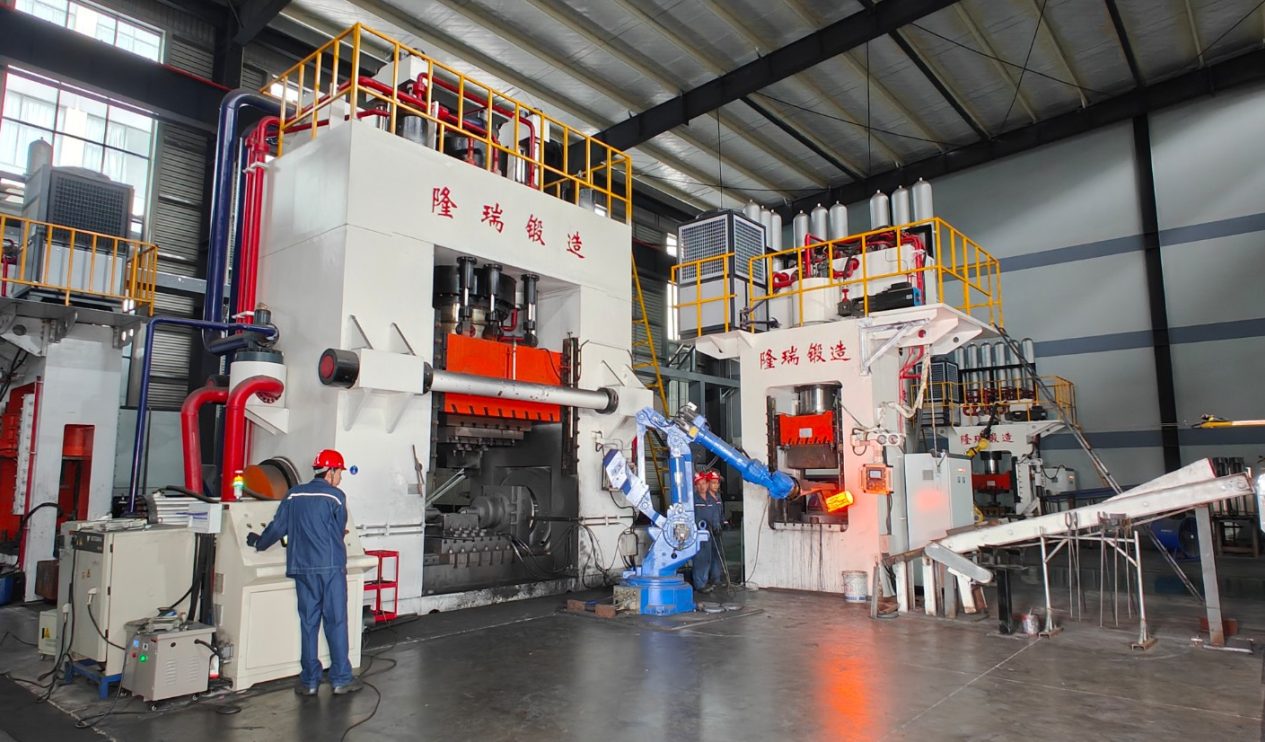
Our plant is built around three multi-directional forging hydraulic presses, among the first installations of this type in Zhejiang Province, producing closed-die forged components:
| Press | Force | Forging Weight Range |
|---|---|---|
| Multi-directional press No.1 | 6000 T (60 MN) | 150 – 520 kg |
| Multi-directional press No.2 | 3000 T | 30 – 150 kg |
| Multi-directional press No.3 | 2000 T | 5 – 30 kg |
Die-Forging Capacity
- Maximum single-piece forging weight: 520 kg (equipment capable up to 800 kg, subject to part-structure review)
- Max machining size: Ø600 mm diameter × 1000 mm length
- Materials: carbon steel, alloy steel and a full range of special steels
- Die-forging annual capacity: 15,000 tonnes
Closed-die forging is our specialty. Open-die forgings are also supplied for parts that fall outside the die-forging range.
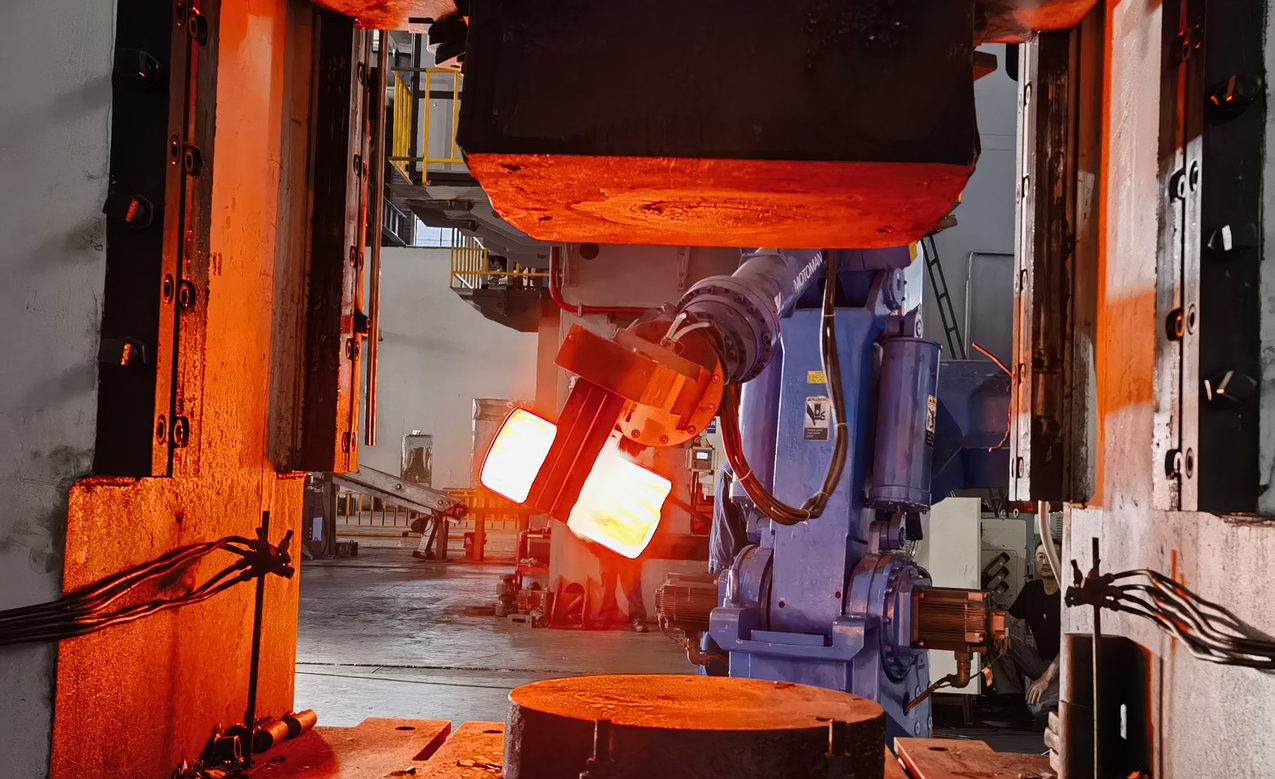
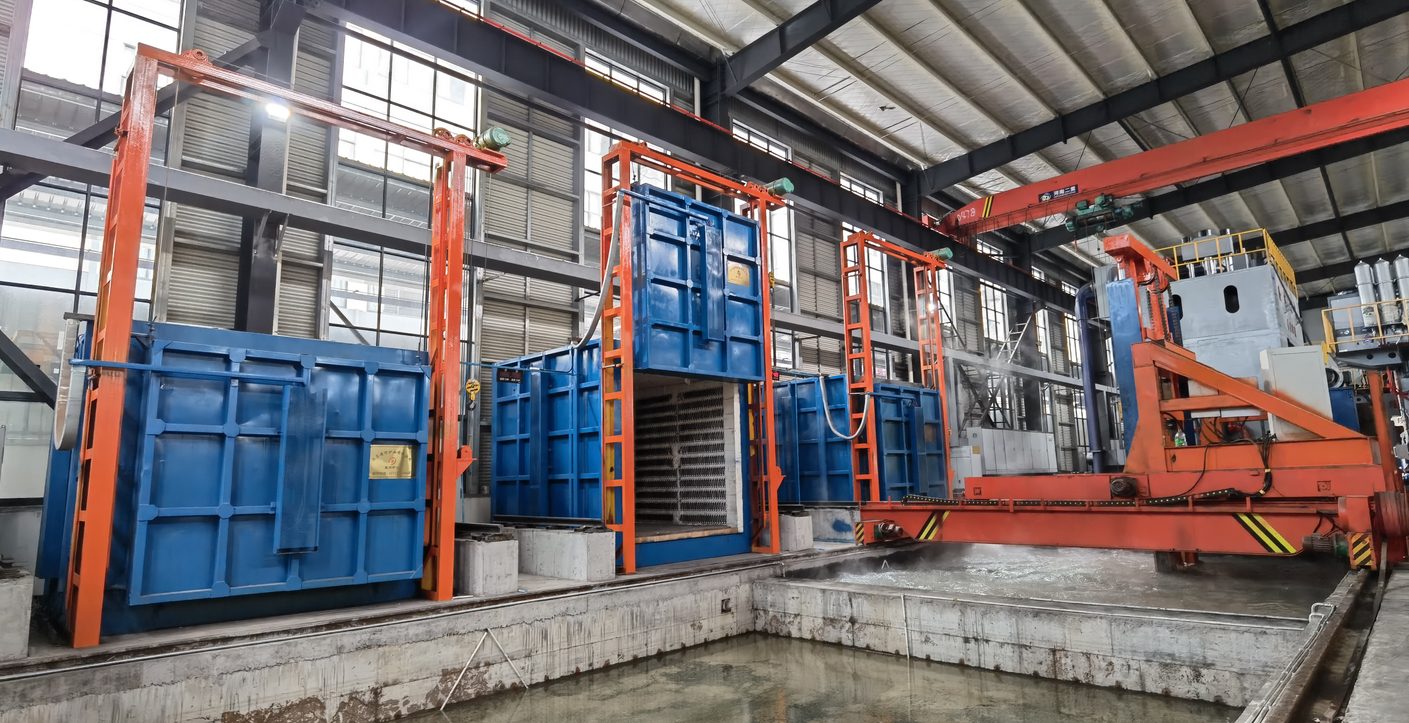
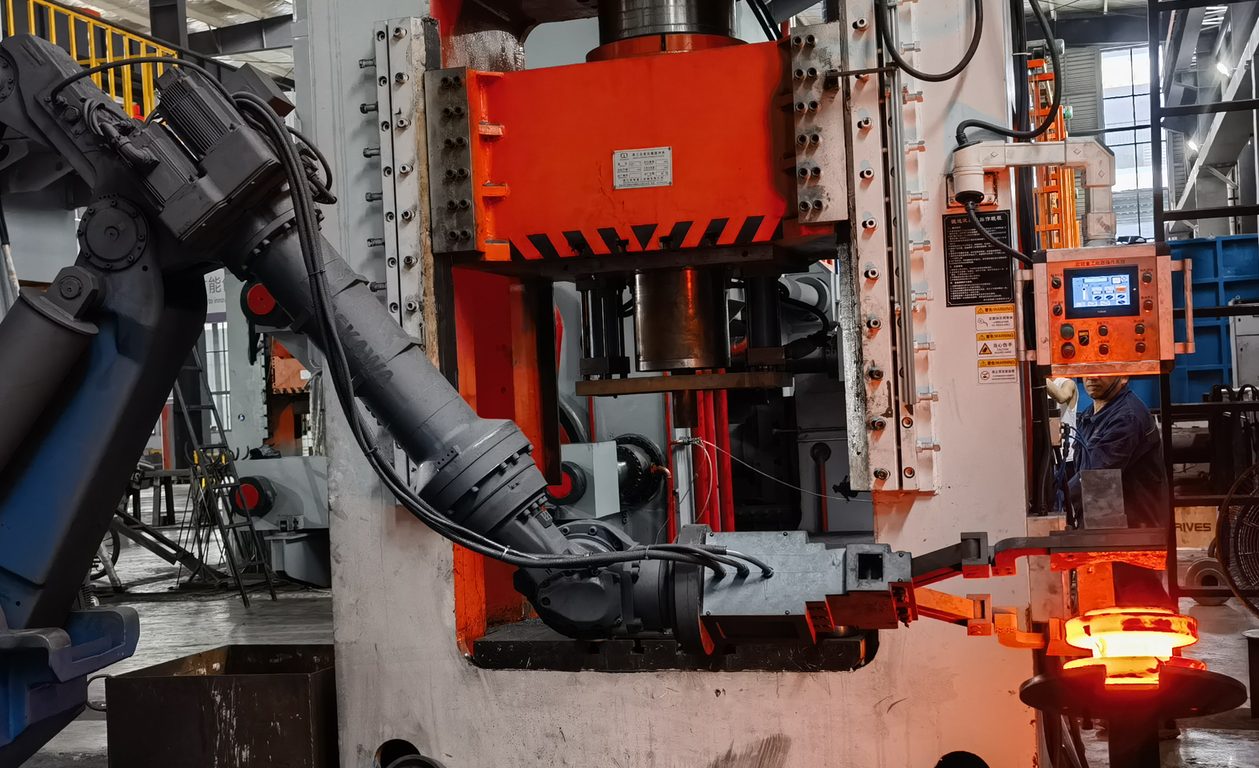
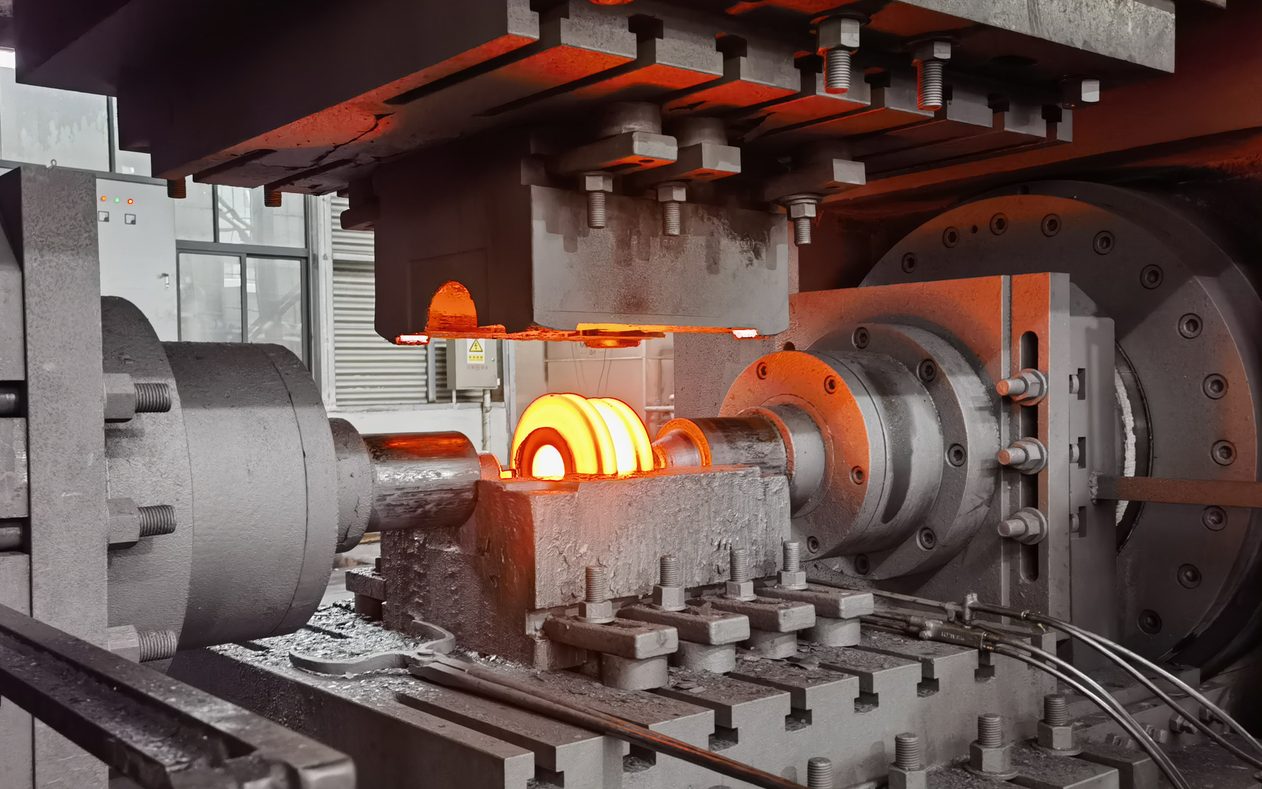
Manufacturing Process (14 Controlled Steps — Including Order Handling and Procurement; 11 Shop Stages)
- Order receipt
- Material procurement
- Incoming inspection (chemical composition by spectrometer)
- Saw cutting
- Cutting inspection (weight, marking)
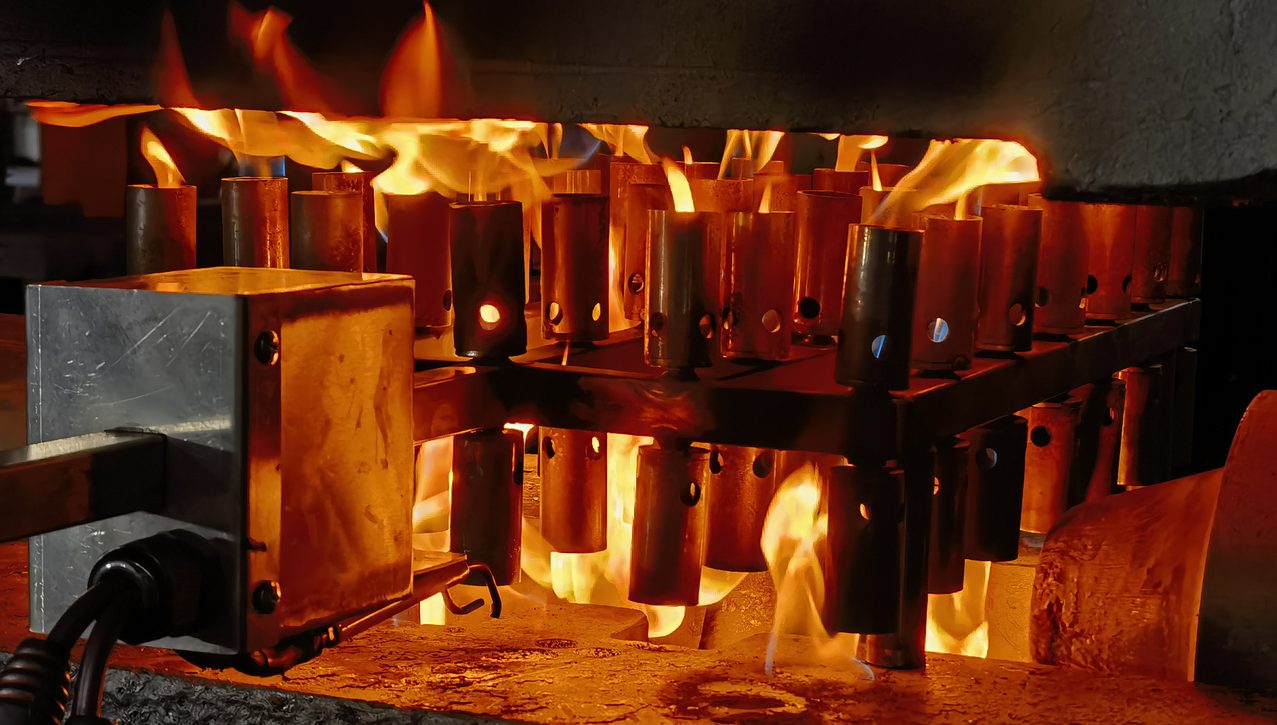
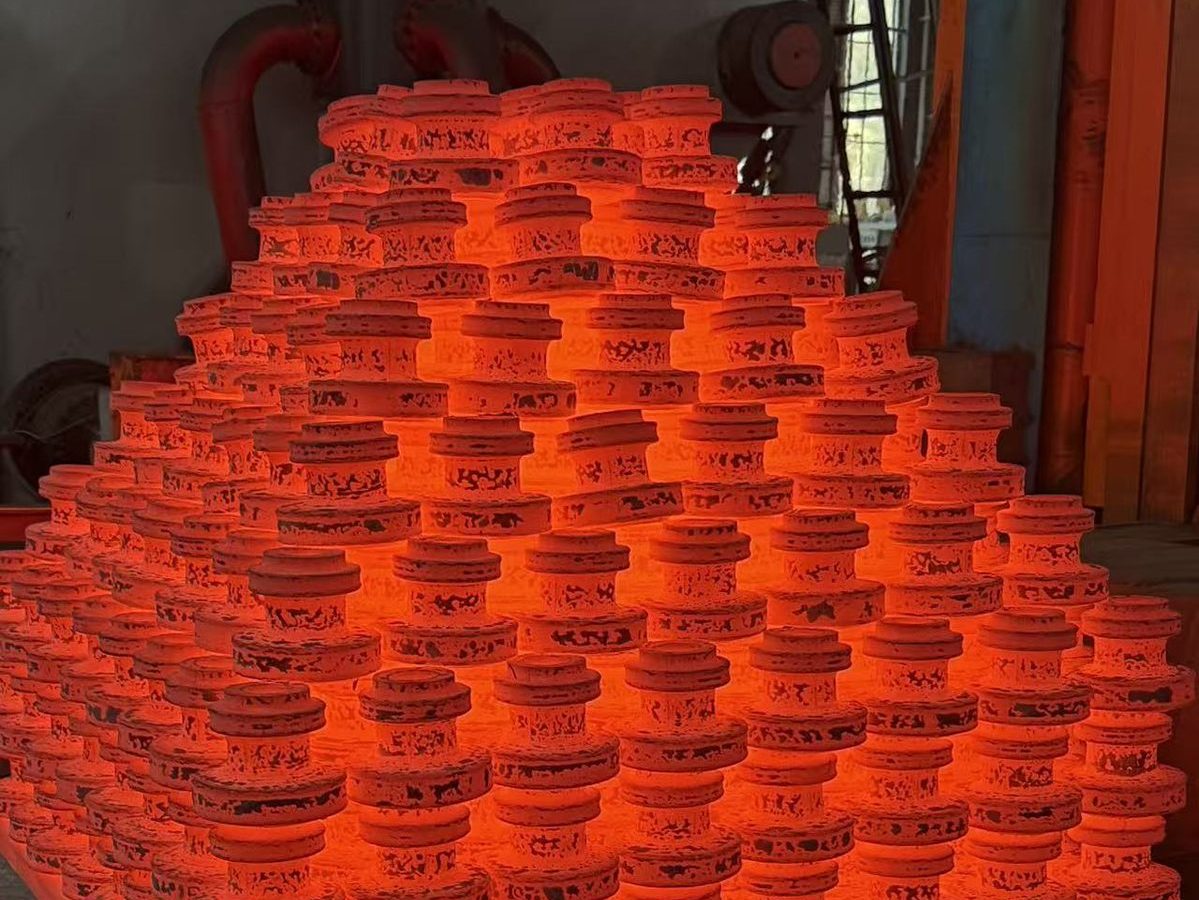
- Heating (temperature controlled)
- Forging (infrared temperature monitoring)
- Post-forging inspection (visual, dimensions)
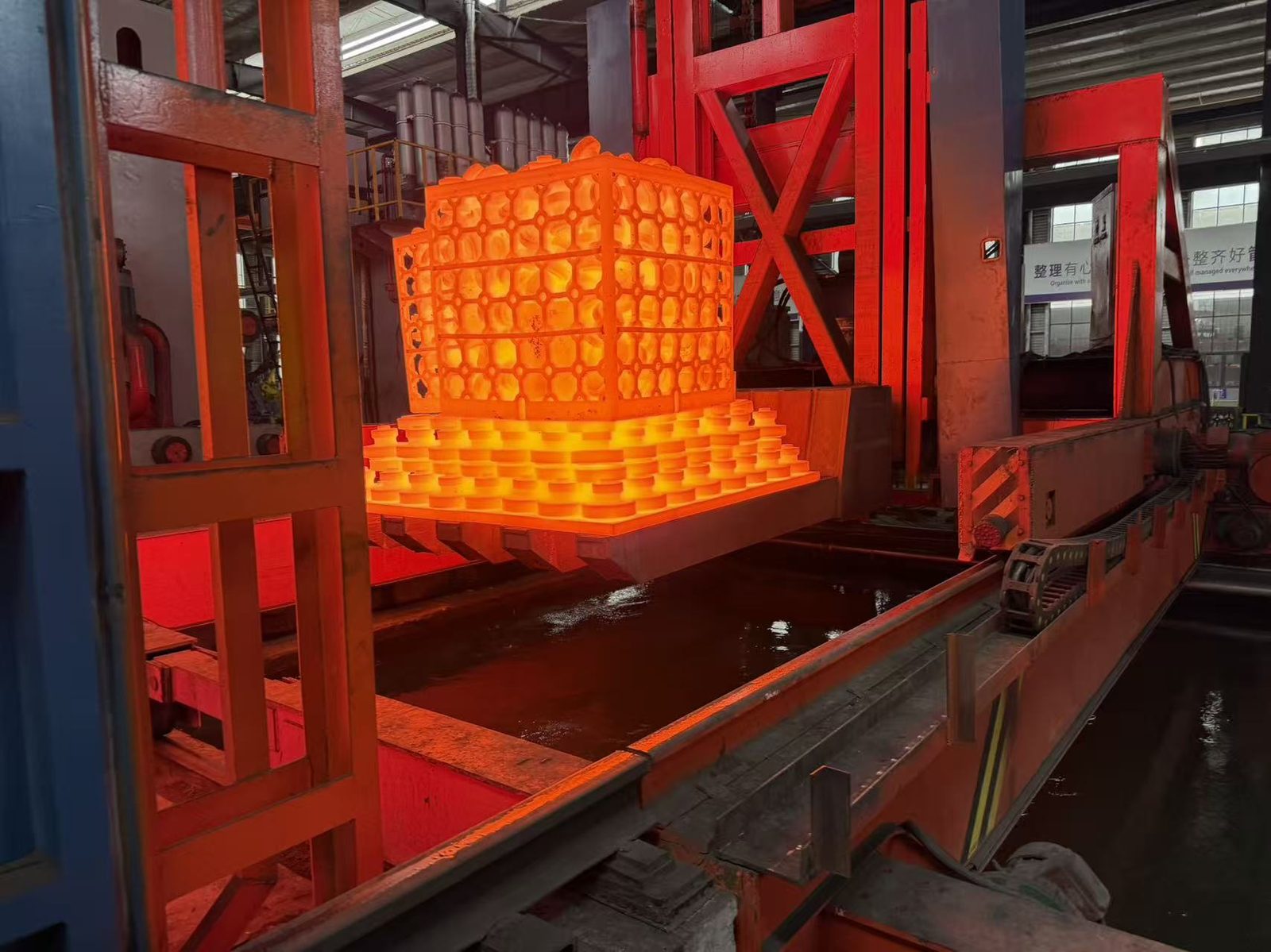
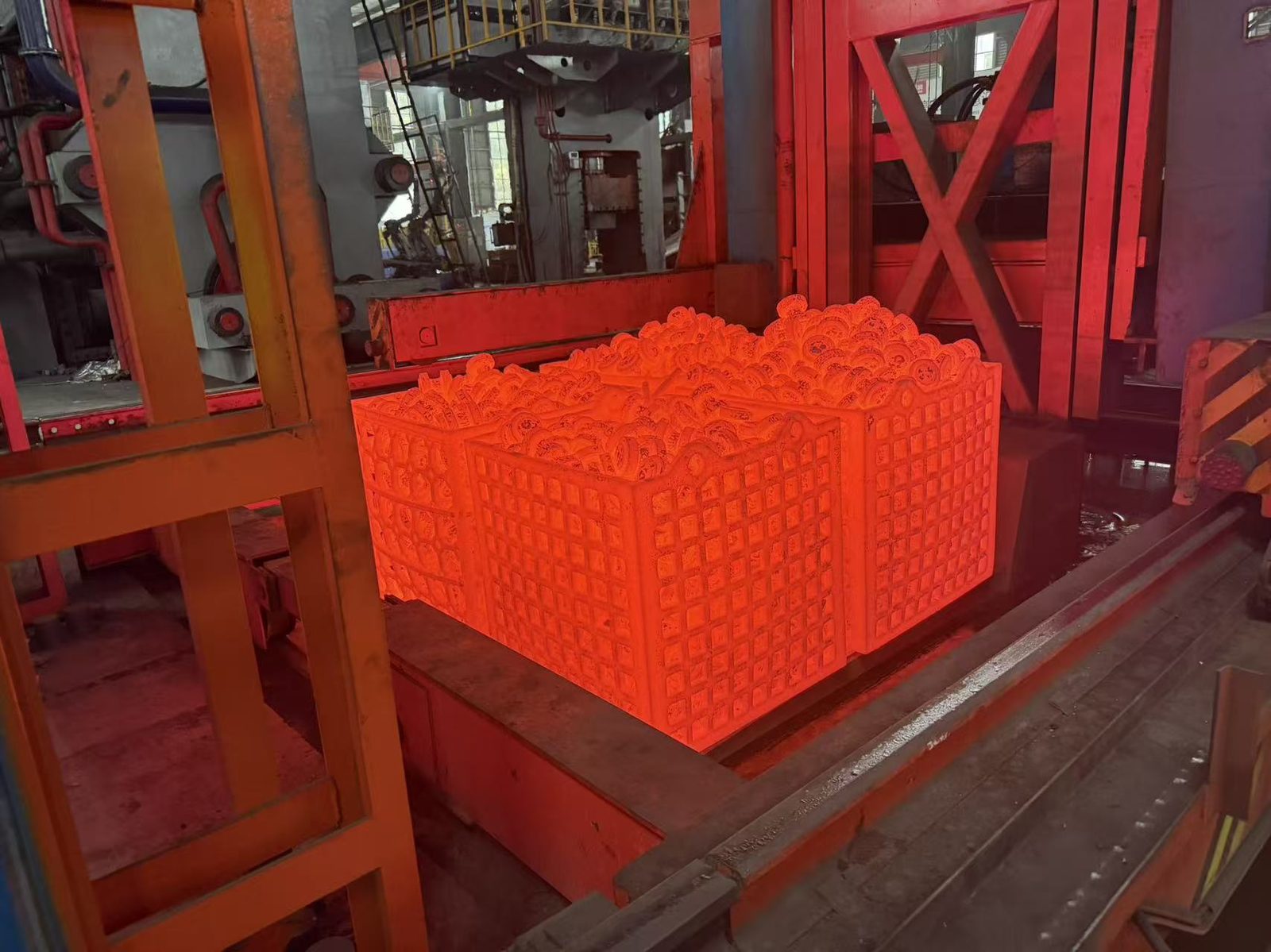
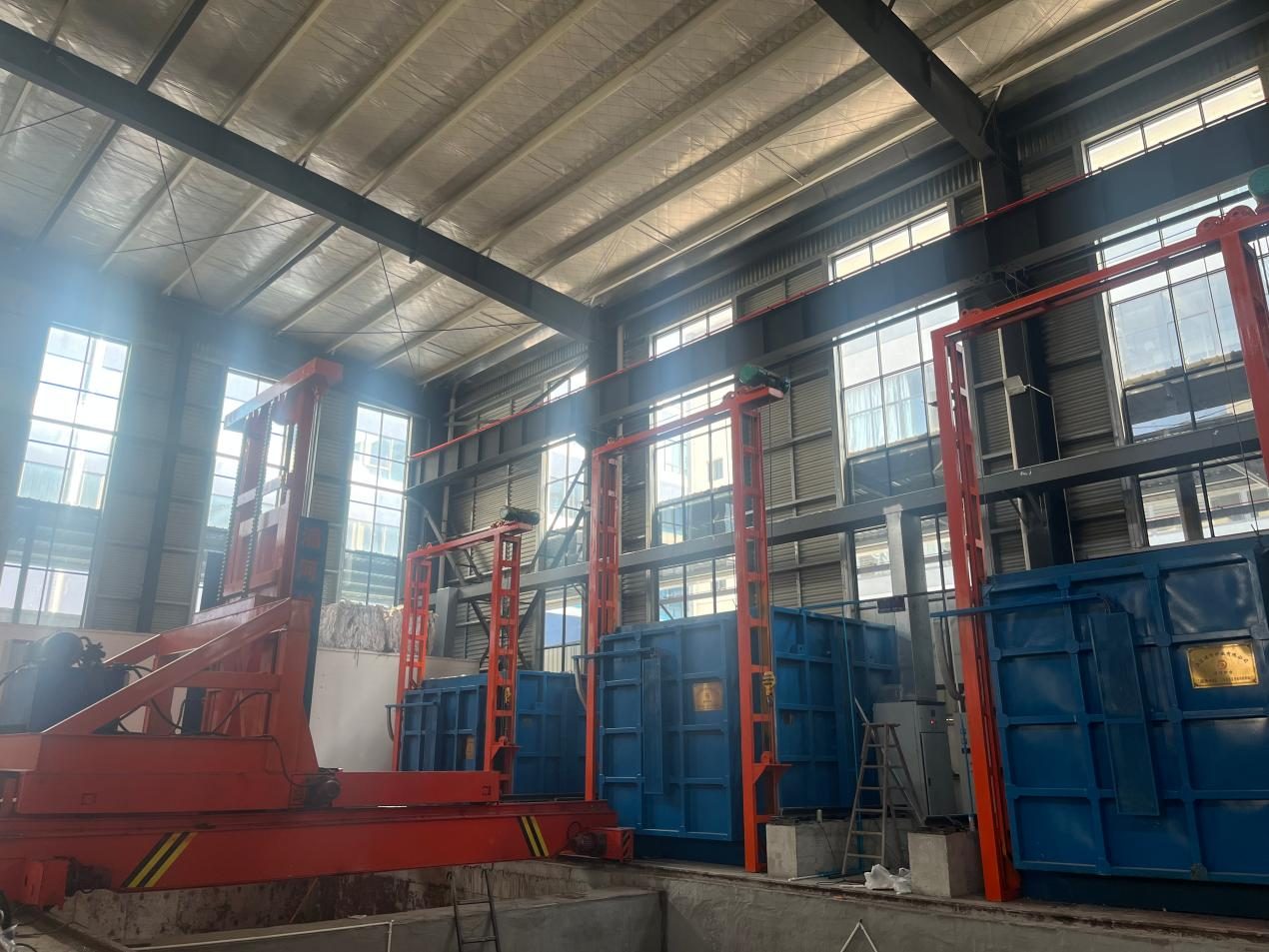
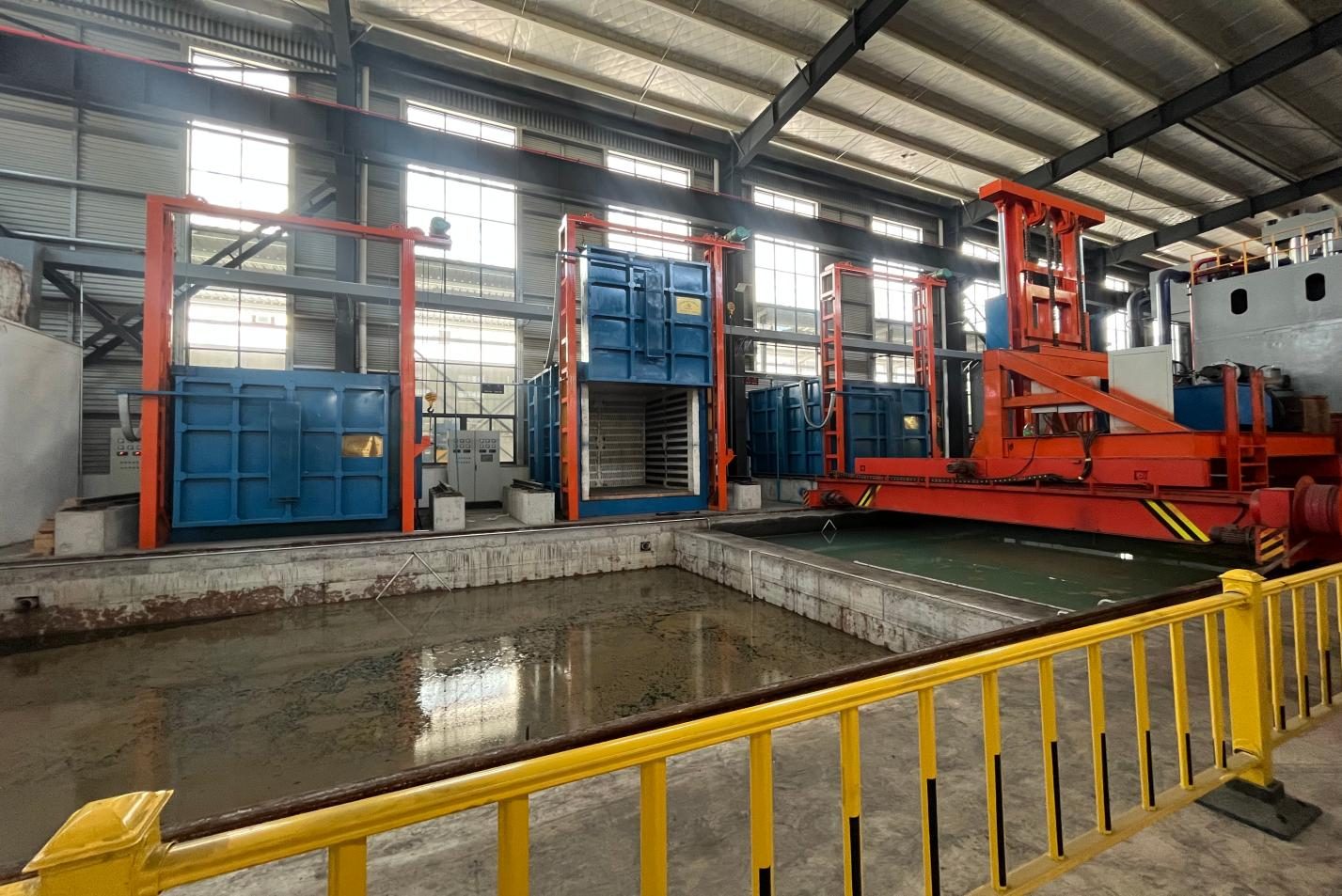
- Heat treatment (controlled heating, cooling medium monitored)
- Post-HT inspection
- Warehousing
- Packing
- Shipment
- After-sales service
Every batch carries full traceability from raw material to delivery.
Heat Treatment & NDT
We operate a complete in-house heat-treatment and non-destructive testing (NDT) capability:
- Heat treatment: quench & temper, solution & ageing, with automated temperature control
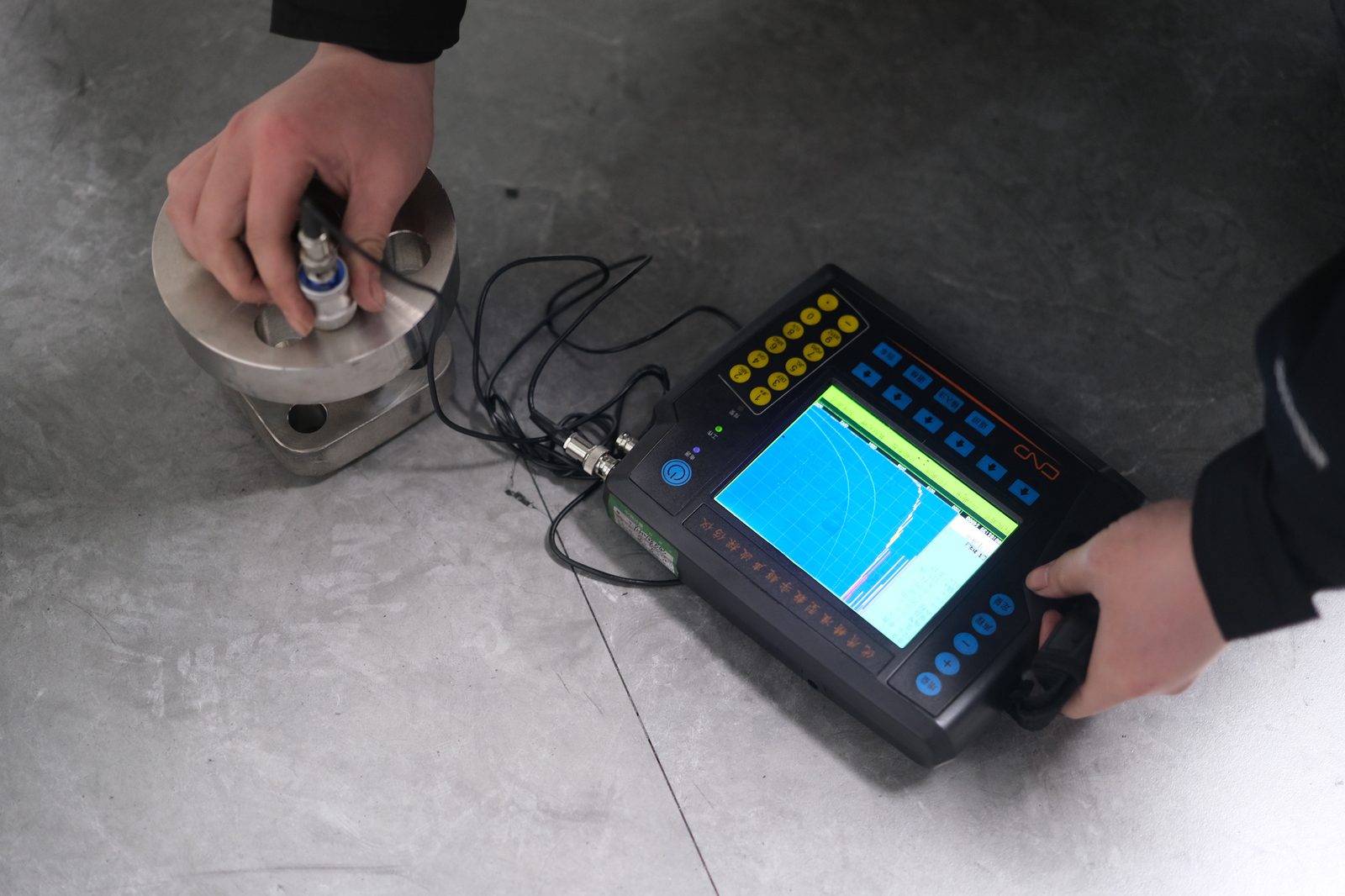
- Non-destructive testing: ultrasonic (UT), magnetic particle (MT) and liquid penetrant (PT)
- Reports issued for each test
In-House Testing Laboratory
| Instrument | Purpose |
|---|---|
| GNR spark optical emission spectrometer (Italy) | Chemical composition analysis |
| Universal tensile testing machine (servo-hydraulic) | Tensile strength, yield, elongation |
| Automatic impact testing machine | Charpy impact energy |
| Impact specimen low-temperature bath | Low-temperature impact testing |
| Impact specimen notch projector & broaching machine | Specimen preparation |
| Portable Brinell hardness tester | Hardness verification |
| Digital ultrasonic flaw detector | Internal defect detection (UT) |
| Infrared pyrometer | Forging temperature control |
| Metallographic microscope | Microstructure examination |
| Calipers, depth gauges and radius gauges | Dimensional inspection |
Need a capability statement for your RFQ? → Download the capability linecard, or contact us.
Capacity Figures You Can Verify
The press ratings, part weights and annual tonnage on this page come from our own shop floor in Yunhe County, Zhejiang: multi-directional presses of 6,000 T (60 MN), 3,000 T and 2,000 T, single forged parts up to 520 kg, machining to Ø600 × 1000 mm, and an annual die-forging capacity of 15,000 tonnes. The systems that audit them carry numbers you can quote: API Spec 20C (Monogram licence 20C-0051), PED 2014/68/EU and AD2000-W0 from TÜV NORD, NORSOK M650 material manufacturer qualification, and BV Mode II NR320 (G0247).
Frequently Asked Questions
What is the largest forging you can produce?
A single forged part can weigh up to 520 kg; our presses are capable of up to 800 kg subject to part-structure review. Maximum machining size is Ø600 x 1000 mm.